The global digital ecosystem stands on the precipice of a monumental paradigm shift. For decades, traditional cryptographic infrastructure has successfully shielded everything from personal bank accounts to highly classified government communications. However, the rapid advancement of quantum mechanics applied to computational science introduces an unprecedented paradox: the very technology capable of dismantling modern security frameworks also holds the ultimate key to achieving unbreakable data protection.
As we navigate through 2026, the race to implement quantum-resistant architectures has shifted from theoretical laboratories into core enterprise strategies. This comprehensive guide explores how quantum computing is revolutionizing global data security, analyzing the critical vulnerabilities of legacy infrastructure, and detailing the cutting-edge frameworks designed to safeguard our interconnected world against future algorithmic threats.
1. The Imminent Collapse of Legacy Encryption
To fully grasp why quantum computing is vital for securing global data, one must first comprehend how easily it can shatter the protective barriers currently in place. Traditional digital security relies heavily on asymmetric cryptographic algorithms. These systems protect data by presenting computational problems that are incredibly simple to set up but practically impossible for classical computers to solve within a reasonable timeframe.
The Vulnerability of Public-Key Infrastructure
Modern security relies on mathematical asymmetry. When you connect to a secure website, send an encrypted message, or authorize a financial transaction, your system uses public-key cryptography. The security of these protocols is fundamentally built on complex mathematical obstacles, which include:
A. The extreme difficulty of factoring exceptionally large composite prime numbers.
B. The computational complexity of solving discrete logarithms across traditional fields.
C. The multi-decade timelines required by standard silicon-based supercomputers to break complex cryptographic keys via brute-force calculations.
While a classical supercomputer would require thousands of years to systematically guess or reverse-engineer a 2048-bit RSA encryption key, a sufficiently powerful quantum computer could theoretically accomplish this objective in mere minutes or hours.
Understanding Shor’s Algorithm
The primary theoretical catalyst behind this vulnerability is Shor’s Algorithm. Formulated by mathematician Peter Shor, this quantum algorithm targets the mathematical foundation of traditional public-key cryptography. Instead of checking possibilities one by one like a classical machine, a quantum computer utilizes unique principles to evaluate all potential factors simultaneously.
Classical computers operate via bits, which exist strictly as a 0 or a 1. Quantum computers utilize quantum bits, or qubits, which can exist in a state of superposition—meaning they represent both 0 and 1 at the same time. When multiple qubits are linked through quantum entanglement, the computational capacity scales exponentially. Shor’s algorithm leverages this massive processing power to rapidly find the periodic factors of large integers, rendering standard RSA and ECC (Elliptic Curve Cryptography) entirely obsolete.
2. The Mechanics of Quantum-Safe Architectures
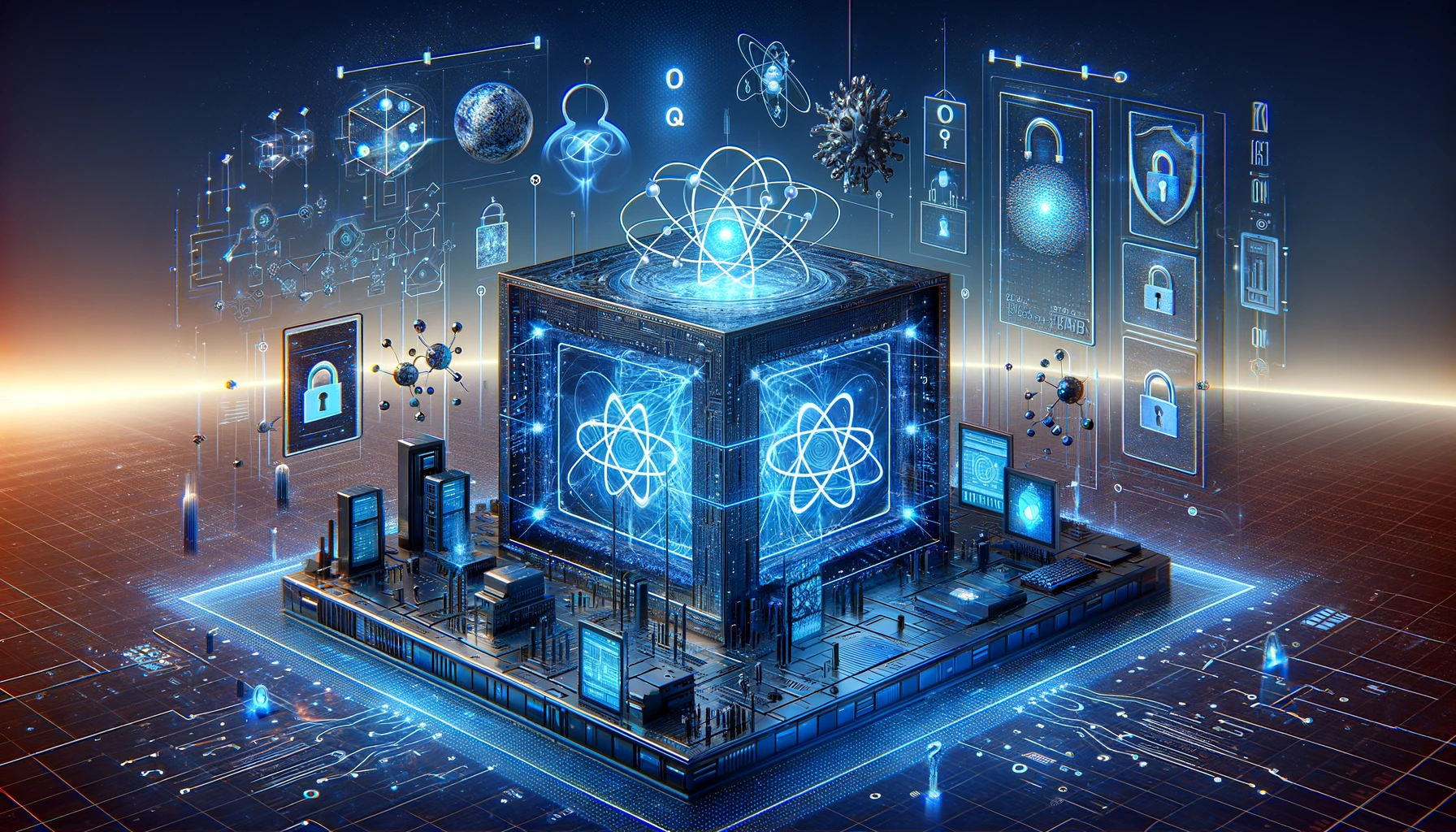
As the threat of quantum decryption grows closer, the global tech industry is not sitting idly by. The defense against quantum threats is divided into two primary fields of study and implementation: Post-Quantum Cryptography (PQC) and Quantum Key Distribution (QKD). Together, these innovations are laying down a highly resilient foundation for future global data infrastructure.
Post-Quantum Cryptography (PQC)
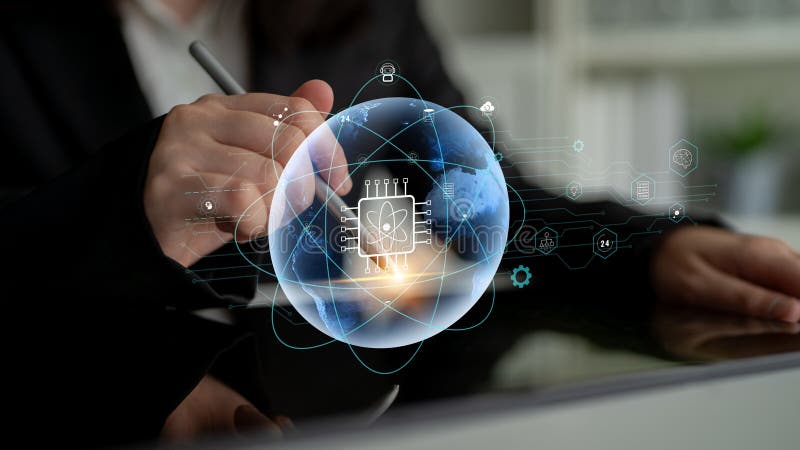
Post-Quantum Cryptography refers to new, advanced mathematical algorithms designed for standard silicon-based computers that can withstand attacks from both classical and quantum adversaries. The National Institute of Standards and Technology (NIST) has spent years evaluating and standardizing these algorithms to replace vulnerable public-key methods.
Unlike RSA, which relies on simple prime number factorization, PQC utilizes complex geometric structures and mathematical frameworks that remain incredibly difficult to solve, even for a system using qubits. The primary families of PQC algorithms include:
A. Lattice-based cryptography, which hides data within incredibly complex, high-dimensional geometric grid networks.
B. Code-based cryptography, which relies on error-correcting codes to create highly secure encryption keys.
C. Multivariate-quadratic cryptography, which uses intricate systems of non-linear polynomial equations.
D. Hash-based signatures, which offer highly reliable digital signature alternatives with proven security histories.
Quantum Key Distribution (QKD)
While PQC changes the mathematical software of encryption, Quantum Key Distribution completely transforms the hardware layer of data transmission. QKD uses the fundamental laws of physics to guarantee secure communication, creating a network environment where eavesdropping is physically impossible without immediate detection.
QKD typically operates by transmitting individual light particles (photons) across a fiber-optic network. The data is encoded using the quantum states of these photons. Because of the core principles of quantum mechanics, any attempt by an outside party to observe, measure, or intercept the photons will instantly alter their fragile quantum states. This disturbance introduces obvious transmission errors, automatically alerting both the sender and receiver that the channel has been compromised. The compromised key is instantly thrown out, and a new one is generated seamlessly.
3. Real-World Applications Across Industries
The practical deployment of quantum security systems is no longer limited to theoretical models. Enterprises, financial institutions, and global governments are actively integrating quantum-safe mechanisms into their current operational workflows. This systematic overhaul protects vulnerable high-value assets from long-term interception strategies.
+-----------------------------------------------------------------------------+
|                       GLOBAL QUANTUM SECURITY ARCHITECTURE                  |
+-----------------------------------------------------------------------------+
|                                                                             |
|   [ Financial Services ]      [ Government & Defense ]     [ Healthcare ]   |
|   - Fraud Prevention          - Classified Data            - Patient Privacy|
|   - Safe Transactions         - National Security          - Genomic Safety |
|                                                                             |
+-----------------------------------------------------------------------------+
|                                                                             |
|                      POST-QUANTUM CRYPTOGRAPHY LAYER                        |
|             (Lattice-Based, Code-Based & Hash-Based Algorithms)             |
|                                                                             |
+-----------------------------------------------------------------------------+
|                                                                             |
|                         QUANTUM KEY DISTRIBUTION LAYER                      |
|                  (Physical Photon Transmission & Satellites)                |
|                                                                             |
+-----------------------------------------------------------------------------+
Financial Infrastructure and Banking
The banking and financial sectors handle massive amounts of highly sensitive data every single day. A widespread breach of cryptographic keys across global financial networks would cause immediate, catastrophic economic instability. To prevent this, major financial institutions are adopting advanced protection measures:
A. Migrating core transaction ledgers to hybrid encryption models that combine classical RSA with lattice-based PQC algorithms.
B. Implementing high-speed QKD networks between regional data hubs to prevent intercept-now-decrypt-later attacks.
C. Upgrading cross-border payment clearings to support much larger, quantum-resistant digital signatures.
Government and National Security
For sovereign nations, quantum data security is a vital element of geopolitical stability and national defense. State actors have historically archived massive amounts of encrypted foreign communications, waiting for the day a quantum computer becomes powerful enough to unlock them. To counter this ongoing threat, defense agencies are taking proactive steps:
A. Upgrading satellite-to-ground communication networks with quantum-encrypted laser relays.
B. Requiring all state data systems to phase out legacy public-key infrastructures in favor of fully standardized NIST PQC frameworks.
C. Establishing secure, localized quantum fiber loops to shield critical utilities and command installations from electronic espionage.
Healthcare, Telecommunications, and Enterprise Data
Beyond banking and government, industries that manage vast amounts of intellectual property and private user information are steadily shifting toward quantum protection. Telecommunication providers are developing quantum-secured cellular networks, while healthcare organizations are adopting PQC to protect sensitive genomic records and private patient histories over multi-decade lifespans.
4. Key Challenges in the Quantum Migration
Transitioning the world’s digital infrastructure to a completely quantum-resistant framework is an incredibly complex engineering task. While the mathematical foundations and physical theories are well-established, scaling these technologies across billions of legacy devices presents significant logistical and technical challenges.
Processing Overhead and System Performance
One of the most immediate impacts of adopting post-quantum cryptography is the noticeable increase in computational overhead. Many PQC algorithms require significantly larger key sizes and more complex processing steps compared to legacy systems.
| Cryptographic Standard | Average Key Size | Computational Resource Demands | Quantum Attack Resistance |
| Legacy RSA-2048 | Small (256 Bytes) | Low Processing Footprint | Completely Vulnerable |
| Lattice-Based (PQC) | Medium to Large | Moderate to High Processing | Exceptionally High |
| Code-Based (PQC) | Exceptionally Large | Variable Optimization Required | Exceptionally High |
This data highlights a clear engineering tradeoff. The massive key sizes of certain post-quantum algorithms require significantly more network bandwidth and memory. For high-powered servers, this increase is manageable. However, for low-power Internet of Things (IoT) devices, smart appliances, and older smartphones, processing these heavy keys can drain batteries quickly and cause noticeable performance slowdowns.
Hardware Limitations and Global Deployment Scales
While Post-Quantum Cryptography can be rolled out via standard software updates, Quantum Key Distribution requires specialized physical infrastructure. Building a widespread QKD network involves installing specialized photon detectors, high-quality laser emitters, and dedicated fiber-optic cabling.
Furthermore, photons naturally lose strength as they travel through standard fiber-optic lines over long distances. This limitation currently caps terrestrial QKD transmissions at a range of a few hundred kilometers. To span oceans and connect different continents, organizations must deploy expensive satellite constellations equipped with quantum laser modules, requiring massive financial investments and deep international cooperation.
5. Strategic Roadmap for Enterprise Quantum Migration
Organizations must not delay their transition until a cryptographically relevant quantum computer is fully operational. Securing global data demands immediate, deliberate action. Businesses should adopt a structured, step-by-step roadmap to assess their vulnerabilities, systematically upgrade their infrastructure, and ensure long-term data resilience.
Step 1: Cryptographic Discovery
  └── Catalog all data assets and locate aging public-key infrastructures.
Step 2: Hybrid Framework Deployment
  └── Run traditional and post-quantum algorithms together to test stability.
Step 3: Continuous Architecture Audits
  └── Monitor network performance and apply newly updated algorithm standards.
A. Cryptographic Discovery and Risk Assessment
The first phase of any enterprise-grade quantum migration strategy involves a thorough inventory audit. Security teams must map out exactly where sensitive data resides and identify the specific algorithms protecting it.
A. Catalog every instance of public-key encryption across all internal applications, cloud environments, and vendor platforms.
B. Prioritize data based on its shelf life, ensuring information that must remain secure for over five years is migrated first.
C. Evaluate the quantum readiness of third-party vendors and supply chain partners to eliminate external security blind spots.

B. Implementing Hybrid Cryptographic Protocols
To ease the transition and maintain stability, organizations are widely adopting hybrid cryptographic frameworks. This approach nests quantum-resistant algorithms directly inside existing, time-tested classical encryption tunnels.
A. Encrypt data packages using both a legacy algorithm (like AES or RSA) and an approved lattice-based algorithm simultaneously.
B. Ensure that a vulnerability or unexpected bug in a new PQC algorithm will not expose the underlying data, as the classical encryption layer remains fully intact.
C. Use hybrid certificates to allow older systems to communicate smoothly with upgraded networks without causing unexpected downtime.
C. Continuous Audits and Staying Agile
As quantum computing technology advances, security standards will continue to adapt. Organizations must build cryptographic flexibility into their systems, allowing them to swap out algorithms easily without rewriting entire applications. Regular security audits, automated patch management, and staying closely aligned with updated international compliance standards are essential for long-term data defense.
Conclusion: Embracing the Quantum Era
The development of quantum computing represents a dramatic evolution in digital security. While the threat to legacy public-key encryption is real and serious, the collective global transition toward post-quantum cryptography and quantum key distribution is effectively neutralizing these risks. By neutralizing algorithmic vulnerabilities before they can be exploited, quantum technology is ultimately building a more resilient, private, and secure internet for the generations to come.