The foundational structure of human civilization relies heavily on traditional academic institutions. For hundreds of years, the core framework of schooling has remained remarkably unchanged: a centralized classroom, a unified lecture plan, a physically present instructor, and standard examinations. This rigid structure was designed during the Industrial Revolution to produce compliant, systematically trained workers. However, as society navigates deep into the digital era, this legacy setup faces unprecedented challenges. The primary catalyst driving this structural upheaval is Artificial Intelligence (AI).
AI is no longer a futuristic concept confined to computer science laboratories or science fiction novels. Instead, it operates actively within modern software, transforming global industries. Among all sectors experiencing this technological shockwave, academic instruction faces the most significant long-term impact. The intersection of classic learning models and advanced machine learning models creates massive systemic tension. It forces public school districts, elite universities, and global policymakers to re-evaluate what it means to teach and learn.
This highly optimized, comprehensive analysis explores the deep realities of the modern educational shift. We will closely examine how legacy educational structures are adjusting to automated technologies. This study looks at the immediate structural benefits, deep ethical dilemmas, systemic vulnerabilities, and what the future holds for global learning environments.
Section 1: The Structural Vulnerabilities of Traditional Schooling
To understand why smart software impacts legacy learning frameworks so deeply, one must analyze the weaknesses inherent in classic institutional models. Standardized learning systems operate on an economic principle of scale rather than customization. This operational approach leaves several vulnerabilities exposed when compared to modern computing solutions:
A. The Uniformity Flaw (One-Size-Fits-All): Classic teaching frameworks assume that every student inside a classroom processes information at an identical speed. A single instructor presents a lecture to a diverse group of thirty or forty individuals. Students who process information quickly often experience deep boredom, losing interest in the subject. Conversely, those who require more time frequently fall behind, accumulating knowledge gaps that ruin their future academic performance.
B. Inefficient Operational Resource Allocation: Academic personnel spend a vast percentage of their weekly schedules on repetitive tasks. Grading standard tests, reviewing repetitive essays, taking attendance, and managing physical paperwork consume hours that could be spent mentoring students. This administrative overload leads directly to severe psychological burnout among teachers worldwide.
C. Outdated, Static Curriculums: The process of writing, editing, printing, and distributing physical textbooks requires years. In fast-evolving fields like biotechnology, data science, and global economics, information becomes obsolete before the physical book reaches a student’s desk. This slow update cycle limits a student’s competitiveness in the modern workforce.
D. Geographic and Socioeconomic Barriers: Access to high-quality instruction has historically depended on a student’s physical location and financial status. Elite institutions act as gatekeepers, keeping high-level expertise behind expensive tuition walls and strict geographic borders.
Section 2: How AI Reinvents the Classroom Experience
The integration of machine learning algorithms addresses these legacy flaws by turning static environments into dynamic spaces. Modern educational technology software does not simply digitize traditional paperwork; it redefines how information is communicated.
+-----------------------------------------------------------------+
|                    THE MODERN AI EDTECH STACK                   |
+-----------------------------------------------------------------+
|  1. ADAPTIVE INFRASTRUCTURE                                     |
|     - Machine Learning Engines analyzing real-time clickstreams |
|     - Natural Language Processing parsing conceptual errors     |
+-----------------------------------------------------------------+
|  2. TEACHER SUPPORT ECOSYSTEM                                   |
|     - Predictive Analytics tracking student dropout risks       |
|     - Automated Semantic Grading for essays and open text      |
+-----------------------------------------------------------------+
|  3. ACCESSIBILITY LAYER                                         |
|     - Real-Time Neural Translation for multi-language rooms     |
|     - Voice-to-Text & Semantic Audio Descriptions for learners   |
+-----------------------------------------------------------------+
Dynamic Learning Paths and Hyper-Personalization
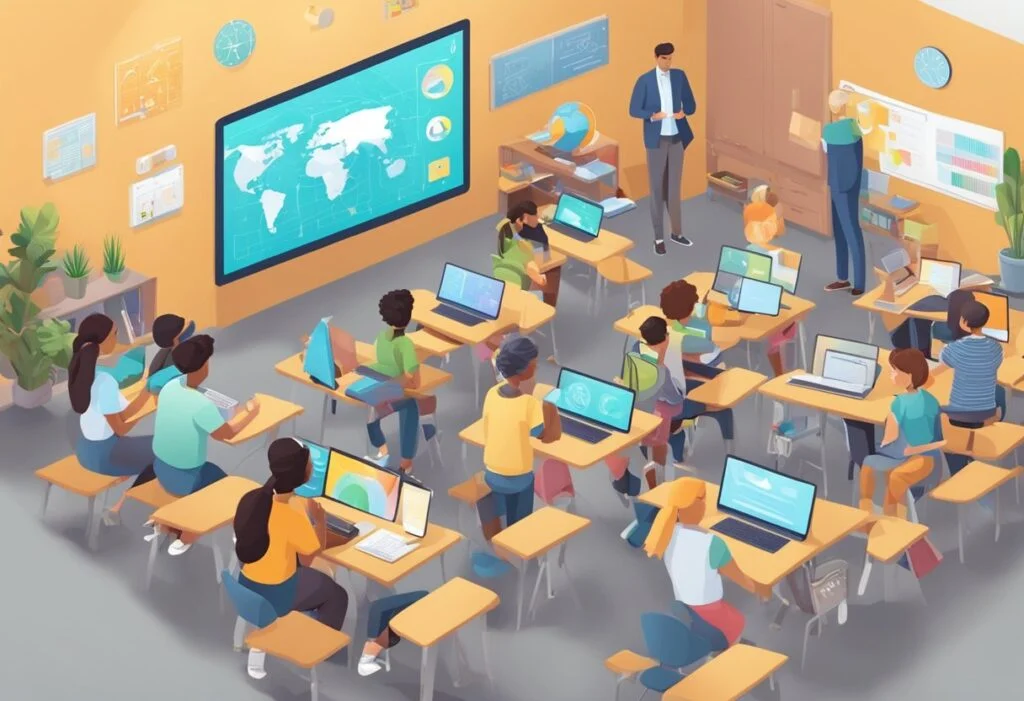
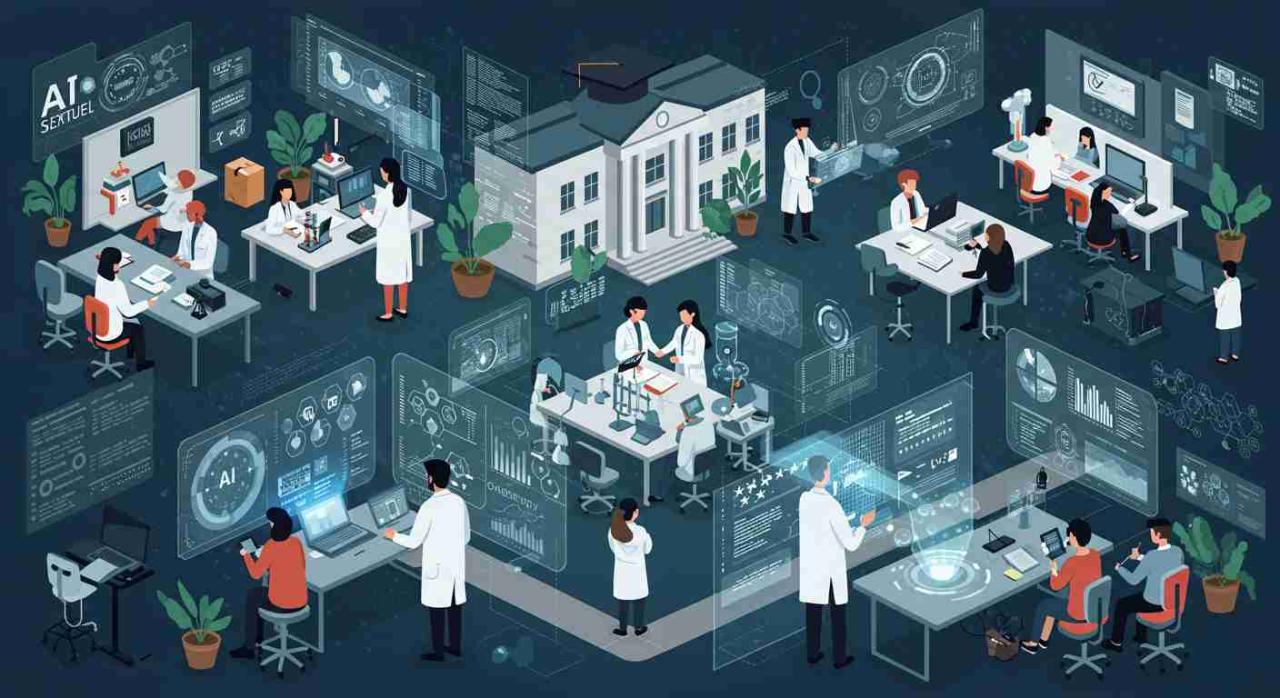
The primary benefit of smart edtech is personalized learning path generation. Rather than forcing every student to follow a rigid syllabus, adaptive platforms use data analytics to monitor learner interactions continuously.
When a student completes a digital learning module, the underlying algorithm tracks more than just right and wrong answers. It monitors how long the user pauses on specific sentences, how frequently they review instructional videos, and where their focus drops. If the platform detects a struggle with a specific algebraic concept, it modifies the curriculum instantly. It introduces foundational exercises before moving forward, acting like an affordable, private human tutor for every student.
Automating Time-Consuming Administrative Work
By shifting administrative responsibilities to automated software systems, school systems give teachers their time back. Natural Language Processing (NLP) tools can analyze written essays, evaluate structural logic, check grammar, and offer contextual feedback.
This automation allows human teachers to step away from repetitive grading and focus on social-emotional development, complex problem-solving mentorship, and direct support for struggling students. The instructor transitions from a rigid lecturer into an active mentor.
Section 3: Key Technology Vectors Driving the Educational Shift
The transition away from classic teaching methodologies is powered by distinct technological breakthroughs, each altering an aspect of the academic journey.
       [Raw Student Interaction Data]
                     │
                     ▼
       ┌───────────────────────────┐
       │  Natural Language Tuning  │
       └─────────────┬─────────────┘
                     │
                     ▼
       ┌───────────────────────────┐
       │   Predictive Analytics    │──► [Early Drop-Out Warnings]
       └─────────────┬─────────────┘
                     │
                     ▼
       ┌───────────────────────────┐
       │  Adaptive Path Engine     │──► [Custom Tailored Syllabus]
       └───────────────────────────┘
A. Large Language Models (LLMs) as 24/7 Tutors: Advanced language architectures allow students to converse with historical simulations, clarify dense scientific topics, and receive instant coding feedback. A student studying physics can ask an LLM to explain thermodynamics using conversational language, complex mathematical proofs, or sports analogies, depending on their personal preference.
B. Predictive Learning Analytics: By processing massive student data histories, predictive systems flag individuals showing early indicators of academic failure. These systems look at subtle drops in digital participation and changing submission patterns, alerting advisors before a student drops out or fails.
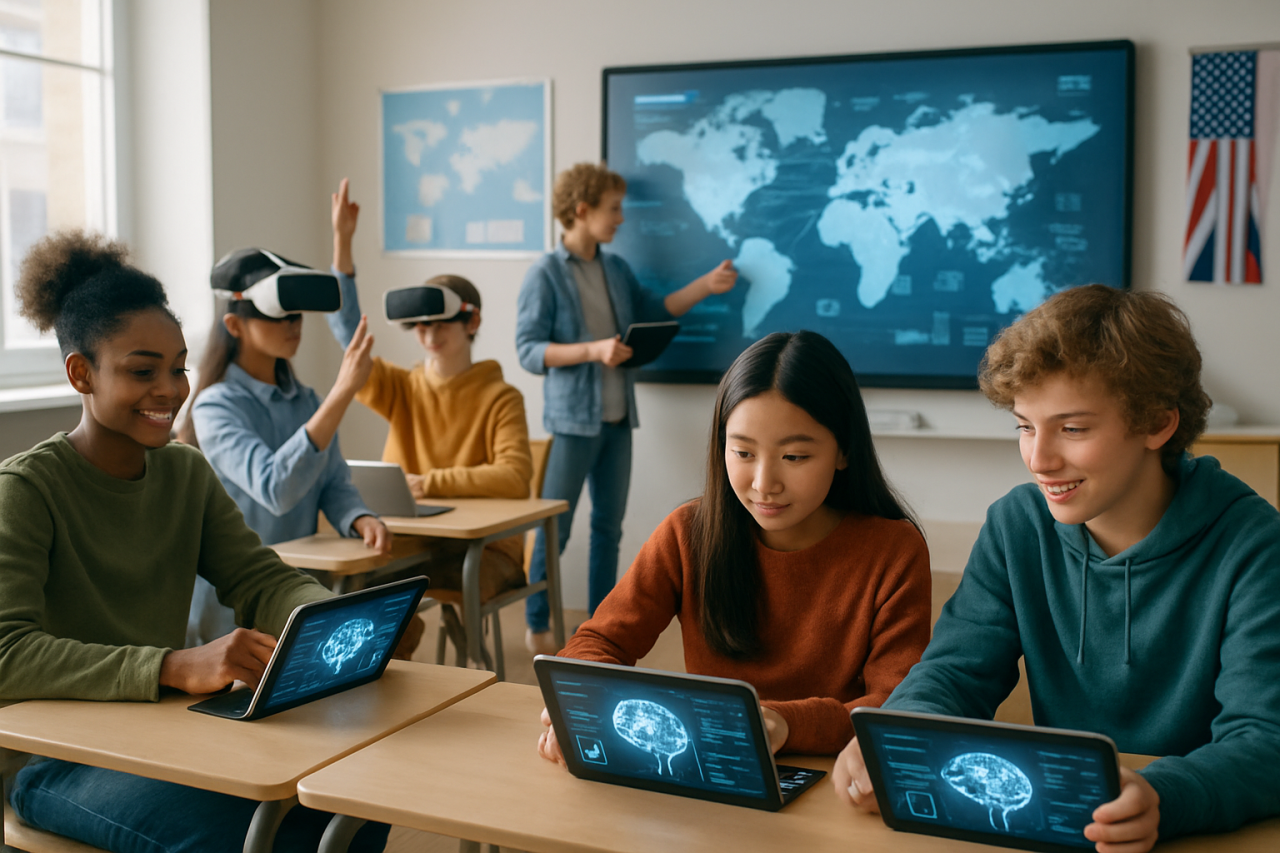
C. Immersive Virtual Reality (VR) Environments: When combined with generative spatial intelligence, VR lets students explore historical sites, examine microscopic cellular processes, or manipulate virtual chemical compounds safely without expensive physical laboratories.
D. Automated Content Generation Platforms: Teachers can use generative tools to instantly build custom quizzes, translated reading materials, and interactive study guides tailored to their classroom’s specific demographic needs.
Section 4: The Threat of Automated Academic Dishonesty
While these technological advancements provide major benefits, they also present significant risks to structural integrity. The most immediate crisis facing high schools and universities is the rapid rise of automated plagiarism.
The Integrity Dilemma: Traditional assessment frameworks rely heavily on out-of-class writing assignments, take-home essays, and unmonitored digital tests. Because generative tools can write high-quality essays in seconds, classic evaluation strategies have become largely obsolete.
This shift has triggered a problematic tech race between students using content generation tools and universities using AI detection platforms. However, detection platforms often struggle with accuracy, frequently flagging non-native English speakers for natural variations in their writing style.
Consequently, relying on traditional written homework as a major grading metric is no longer viable. Academic institutions are forced to overhaul their assessment strategies by shifting toward supervised in-person exams, oral presentations, or project-based applications that require real-world critical thinking.
Section 5: The Digital Divide and Socioeconomic Inequalities
The rapid deployment of automated platforms risks widening the existing global inequality gap. While wealthy school districts integrate premium software tools, high-speed networks, and modern devices, underfunded public schools often struggle to maintain basic internet access.
A. The Technology Access Gap: Students in wealthy areas use advanced personalized AI engines that accelerate their learning. Meanwhile, students in lower-income communities remain stuck in underfunded, overcrowded classrooms without access to digital tools. This imbalance could accelerate wealth and opportunity gaps in the modern economy.
B. The Data Privacy Threat: Advanced educational tools require massive amounts of student data to function effectively. This continuous monitoring raises serious ethical issues regarding student data tracking, corporate monetization, and potential data breaches involving minors.
C. The Loss of Human Socialization: Over-reliance on algorithmic learning platforms risks reducing essential human-to-human interaction. Classrooms are critical spaces where students build vital soft skills like empathy, group collaboration, public speaking, and conflict resolution. A purely screen-focused education risks creating an isolated generation lacking foundational social skills.
D. The Algorithmic Bias Risk: Machine learning models mirror the biases present in their training data. If an application contains cultural or demographic biases, it can misjudge a student’s potential, creating unfair outcomes for marginalized groups.
Section 6: Redefining the Role of the Human Instructor
The rise of automated tools does not mean human teachers will become obsolete. Instead, it requires a fundamental evolution of their professional responsibilities. The image of a teacher standing at a whiteboard delivering a static lecture is fading. In its place, the modern instructor acts as an educational concierge and emotional support anchor.
┌──────────────────────────────────────┐     ┌──────────────────────────────────────┐
│       LEGACY TEACHING ROLE           │     │         EVOLVED COGNITIVE ROLE       │
├──────────────────────────────────────┤     ├──────────────────────────────────────┤
│ - Factory-style lecture delivery     │     │ - Personalized behavioral mentoring  │
│ - Manual essay evaluation & grading  │     │ - Critical evaluation validation     │
│ - Strict standardized focus          │ ──► │ - Socio-emotional development coach  │
│ - Single structural viewpoint        │     │ - Cross-disciplinary problem solving │
└──────────────────────────────────────┘     └──────────────────────────────────────┘
Machines excel at processing raw data, identifying patterns, and delivering personalized repetition. However, they lack human empathy, intuitive understanding, inspiration, and emotional support. A software tool can explain why an algebraic equation is incorrect, but it cannot notice a student’s quiet emotional distress, provide personal encouragement, or spark a lifelong passion for discovery.
Tomorrow’s successful educators will master these automated tools, using them to eliminate administrative burdens so they can focus heavily on human mentorship and emotional development.
Section 7: Re-engineering Global Assessment Models
Because generative technology can easily bypass traditional tests, global testing models require an immediate, comprehensive update. Continuing to use memory-based examinations is ineffective in an era where the entirety of human knowledge can be accessed instantly via voice commands.
| Legacy Evaluation Metrics | AI-Era Evaluation Metrics |
| Rote Memorization Testing: Memorizing historical dates, vocabulary terms, and pre-calculated formulas. | Prompt Literacy & Synthesis: Formulating precise queries and critically analyzing the accuracy of automated outputs. |
| Standard Essay Homework: Out-of-class essay writing, which can easily be generated by language models. | VIVA Voce & Oral Defense: Defending conceptual arguments in person through dynamic dialogue. |
| Isolated Subject Exams: Evaluating math, history, and science in silos without real-world overlap. | Cross-Disciplinary Projects: Solving real-world community problems using multidisciplinary tools. |
Future assessment models will prioritize the process of learning over the final product. Educators will evaluate how a student arrives at a conclusion, their ability to verify automated data sources, and how effectively they apply critical thinking to complex problems.
Section 8: The Economic Impact on Global Employment markets
The transformation of education is directly tied to shifts in the modern job market. As automation alters white-collar industries, the skills taught in schools must evolve to prevent massive structural unemployment.
A. The Rise of Prompt Engineering and Data Literacy: The ability to communicate effectively with automated models is rapidly becoming a mandatory skill across corporate environments. Classrooms must integrate AI interaction and digital literacy into their core language arts and sciences tracks.
B. Prioritizing Creative and Analytical Synthesis: Because software can instantly draft standard emails, basic code, and generic reports, human professionals must focus on high-level strategy, creative design, and nuanced problem-solving.
C. Fostering Lifelong Learning Habits: The concept of completing school at age twenty-two and working a single stable job for forty years is over. Because technologies change rapidly, workers must continuously reinvent their skill sets. Educational systems must pivot to support ongoing adult education and micro-credential certifications.
D. Emphasizing Human-Centric Soft Skills: Roles requiring deep emotional intelligence, leadership, cross-cultural collaboration, and ethical decision-making are highly resilient against automation. Modern curriculums must treat these soft skills as foundational elements rather than optional electives.
Section 9: Strategic Implementation Playbook for Institutions
For educational institutions looking to survive this transition, passive resistance is a losing strategy. Schools must implement structured modernization frameworks to successfully adapt:
┌────────────────────────────────────────────────────────┐
│        INSTITUTIONAL EVOLUTION PLAYBOOK                │
├────────────────────────────────────────────────────────┤
│ PHASE 1: Infrastructure Overhaul                       │
│ └─ Deploy secure, privacy-compliant sandbox networks.  │
├────────────────────────────────────────────────────────┤
│ PHASE 2: Faculty Upskilling                            │
│ └─ Train teachers in algorithmic prompt methodologies. │
├────────────────────────────────────────────────────────┤
│ PHASE 3: Assessment Restructuring                       │
│ └─ Transition to oral defenses and portfolio reviews.  │
└────────────────────────────────────────────────────────┘
A. Establish Secure, Privacy-Compliant Local Frameworks: School networks should deploy internal, secure language models that protect student privacy, prevent corporate data tracking, and filter out inappropriate content.
B. Comprehensive Teacher Upskilling Initiatives: School districts must invest heavily in training existing teachers. Instructors need to learn how to design effective automated prompts, spot machine-generated hallucinations, and use analytical dashboards to improve their daily teaching.
C. Overhaul Academic Integrity Codes: Schools need to update honor codes, shifting away from outdated punitive models toward clear guidelines that teach students how to use automated tools transparently and ethically.
D. Build Public-Private Technology Partnerships: Academic institutions should collaborate with innovative technology organizations to co-develop custom learning tools that meet specific community needs and local budget requirements.
Conclusion: Designing the Future of Global Education
The rise of artificial intelligence is not a passing trend, nor does it mean the end of formal education. It represents an unavoidable evolution. While this transition breaks long-standing institutional habits and creates real friction, the potential benefits for humanity are immense.
By moving away from rigid, industrial-era models, we can build a highly scalable system that respects individual human potential. This future model will use intelligent software to handle administrative burdens and adapt to distinct learning speeds, while human educators focus on inspiration, empathy, and critical thinking. The future of education relies on a balanced partnership: using advanced machine intelligence to empower deep human potential.