Global economic structures are grappling with an emerging threat that directly challenges the stability of grocery prices, household budgets, and geopolitical security. This phenomenon, increasingly designated by economists as climateflation, represents the persistent, upward pressure exerted on inflation metrics by climate change and extreme weather volatility. Far from a speculative long-term risk, climate-driven price spikes have materialized as a primary driver of food insecurity worldwide, challenging traditional central banking frameworks and pushing millions of vulnerable families below the poverty line.
The mechanics of climateflation bypass conventional supply-and-demand cycles. As volatile weather patterns compromise crop yields, damage logistics infrastructure, and restrict vital water systems, the global agricultural matrix experiences structural supply deficits. When the total availability of crucial commodities drops while international demand climbs along with population growth, sharp price increases become inevitable.
Understanding the New Paradigm of Climateflation
To comprehensively analyze how climate shifts alter macroeconomic indicators, it is necessary to separate the broad concept of climate change into distinct, observable inflationary drivers. Researchers at the European Central Bank (ECB) and the Potsdam Institute for Climate Impact Research have established that these climate shocks do not act as temporary anomalies. Instead, they introduce structural, non-linear upward cost pressures that can persist within a retail ecosystem for twelve months or longer following an initial environmental event.
Economists break down the mechanics of climate-driven price changes into three major structural channels:
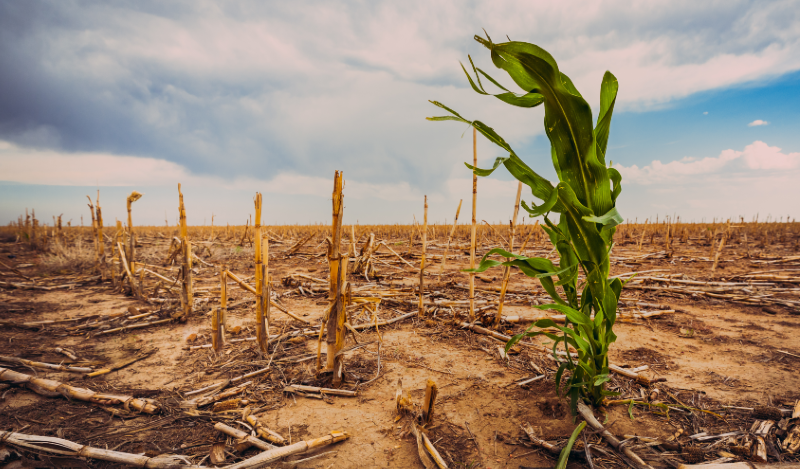
A. Heatflation: This refers to the direct economic consequences of prolonged, unseasonable heat waves on biological systems. Extreme heat damages the fundamental reproductive cycles of crops, increases moisture evaporation from topsoils, and stresses livestock, directly resulting in reduced harvests and higher production costs. B. Precipitation Anomalies: This category encompasses both extreme droughts and sudden, heavy rainfall events. While droughts dry out arable land and deplete irrigation reservoirs, excessive rainfall erodes topsoil, washes away active nutrients, and creates environments prone to crop diseases. C. Logistical and Infrastructure Failures: Severe climate events frequently disable the physical transit corridors required to bring food from farm to market. Floods submerge rural rail links and highways, while severe storms damage sea terminals, isolating agricultural regions and stranding perishable supplies.
+-----------------------------------------------------------------------+
|                       CLIMATE SHOCK EVENTS                           |
|         (Heat Waves, Severe Droughts, Unseasonal Floods)              |
+-----------------------------------------------------------------------+
                                   |
                                   v
+-----------------------------------------------------------------------+
|                    STRUCTURAL SUPPLY CONTRACTION                      |
|         - Direct crop failure & reduced agricultural yields           |
|         - Loss of fertile topsoil & irrigation water scarcity         |
|         - Disrupted shipping lanes, ports, & rural roadways          |
+-----------------------------------------------------------------------+
                                   |
                                   v
+-----------------------------------------------------------------------+
|                    SYSTEMIC CLIMATEFLATION MARKET SPIRAL              |
|         - Spikes in commodity, wholesale, and retail food prices     |
|         - Higher agricultural input costs (fertilizer, energy)        |
|         - Extended inflationary pressure lasting over 12 months       |
+-----------------------------------------------------------------------+
Macroeconomic Analysis: Cascading Effects Across Supply Chains
The global food production network functions as an interconnected system where a localized weather disruption quickly ripples through international markets. When an extreme weather event severely impacts a major agricultural exporter, it alters the global balance of that specific commodity. This triggers a sequence of market dynamics that drives retail food prices upward worldwide.
The Dynamics of Yield Contraction
When a climate shock reduces harvest volumes, agricultural producers face immediate revenue pressures. To offset the financial losses from smaller crop yields, farmers must raise wholesale prices for their remaining inventory. This baseline cost increase moves step-by-step through the supply chain:
A. Commodity Brokers: Traders bid up futures contracts on international commodity boards to guarantee supply, increasing the baseline cost of raw ingredients. B. Industrial Processors: Food manufacturers pay higher prices for these raw ingredients, prompting them to alter their pricing structures to maintain corporate operating margins. C. Logistics Networks: Transport companies navigate disrupted shipping lines or pay higher fuel premiums caused by climate-driven energy infrastructure stresses, adding further distribution costs. D. Retail Outlets: Supermarkets and grocery providers pass these accumulated wholesale and distribution increases down to consumers, resulting in higher shelf prices.
Upstream Input Amplification
Climateflation is further aggravated by rising costs for core agricultural inputs, particularly energy and chemical fertilizers. Extreme weather often disrupts the industrial manufacturing plants responsible for synthesizing nitrogen-based fertilizers.
Furthermore, geopolitical tensions along key trade routes, such as maritime bottlenecks, can cause substantial spikes in international energy prices. Because modern agriculture depends heavily on fossil fuels for tractor operations, harvesting machinery, and long-distance transport, any instability in energy markets rapidly translates into higher food prices.
Real-World Case Studies of Climate-Driven Inflation
The economic realities of climateflation are evident across international consumer markets. Diverse geographical regions are experiencing pronounced, unpredictable price spikes for staple crops and consumer foodstuffs due to clear, traceable climate anomalies.
The European Olive Oil Crisis
During the 2022 to 2024 agricultural cycles, Southern Europe experienced consecutive heatwaves and severe droughts. Spain, which typically supplies more than 40 percent of the world’s olive oil, saw its agricultural output fall to roughly half of its historical averages. This severe supply shortage caused international wholesale olive oil prices to surge by over 50 percent, transforming an everyday cooking staple into a luxury product across global supermarkets.
East Asian Crop Volatility
Extreme weather events have similarly disrupted agricultural stability across Asia. In Japan, consecutive record-breaking summer temperatures culminated in a 48 percent surge in domestic rice prices.
Simultaneously, South Korea experienced severe heatwaves that caused a 70 percent increase in the market price of napa cabbage, a core ingredient for national food supplies. These sudden spikes illustrate how vulnerable specialized agricultural systems are to rapid regional temperature changes.
The Latin American Fruit and Vegetable Deficit
In North America, severe droughts in Mexico during early 2024 limited the production of key agricultural exports. This climate disruption led to a 20 percent price increase for imported fruits and vegetables in neighboring retail markets.
This trend mirrors previous market shocks in California, where localized droughts and unseasonable heat waves caused regional vegetable prices to spike by 80 percent, demonstrating that even advanced, highly mechanized agricultural sectors remain vulnerable to climate-driven market disruptions.
Quantifying the Future Economic Projections
Empirical modeling from central banks and climate research networks suggests that climateflation will likely intensify in the coming decades. If global emissions and historical agricultural practices continue on their current path without significant adaptation, the financial impacts on global food systems will grow considerably.
+--------------------------------------------------------------------------+
|            PROJECTED INCREASES IN ANNUAL FOOD INFLATION BY 2035           |
+--------------------------------------------------------------------------+
| Region / Scenario        | Minimum Projected Rise | Maximum Projected Rise|
+--------------------------+------------------------+----------------------+
| Global Average Baseline  | +0.92% per annum       | +3.23% per annum     |
| Global Headline Inflation| +0.32% per annum       | +1.18% per annum     |
| Global South Hotspots    | +2.10% per annum       | +4.00% per annum     |
| Extreme Heatwave Event   | +1.50% temporary spike | +3.50% permanent shift|
+--------------------------------------------------------------------------+
As these baseline figures integrate into standard economic indicators, international central banks face an increasingly complex challenge. Historically, monetary institutions viewed weather-related food price shifts as temporary supply shocks that would naturally stabilize over time.
However, the increasing frequency and severity of extreme weather events mean these price pressures are becoming a continuous feature of global markets. This complicates traditional monetary policy, making it harder for central banks to stabilize core inflation without inadvertently suppressing broader economic growth.
The Social Cost: Deepening Global Food Insecurity
While rising grocery prices represent an inconvenience for high-income households, they pose a severe threat to lower-income families. Because poorer households spend a much larger percentage of their monthly income on basic food items, they bear the brunt of climateflation.
When staple food costs rise rapidly, these households are often forced to adjust their spending patterns. Families frequently pivot from nutrient-rich foods toward cheaper, calorie-dense, low-nutrient alternatives. In severe cases, they must reduce their overall food consumption, which directly worsens rates of acute malnutrition and food insecurity.
According to the 2026 Global Report on Food Crises, acute food insecurity remains widespread globally, with severe famines confirmed in regions deeply impacted by a combination of political instability and severe environmental degradation. The report highlights that millions of people across East, Southern, and West Africa face acute food shortages during lean agricultural seasons.
These challenges are amplified by regional weather anomalies, demonstrating how climate-driven market pressures can push vulnerable populations from systemic poverty into active food crises.
Geopolitical Instability and Shifting Trade Paradigms
Food systems are deeply intertwined with international security. Historically, sharp spikes in the cost of basic food items have served as a catalyst for widespread social unrest, political upheaval, and mass migration. When citizens can no longer afford foundational food staples, public trust in governing institutions declines, increasing the risk of civil instability.
+--------------------------+      +--------------------------+      +--------------------------+
|   Local Climate Shock    | ---> | Crop Yield Contraction   | ---> | Domestic Food Price Spike|
+--------------------------+      +--------------------------+      +--------------------------+
                                                                                  |
                                                                                  v
+--------------------------+      +--------------------------+      +--------------------------+
| High Geopolitical Risk   | <--- | Civil Unrest & Protests  | <--- | Household Budget Strain  |
+--------------------------+      +--------------------------+      +--------------------------+
To shield their domestic populations from rising global food prices, several major agricultural countries are adopting protective trade policies. These strategies typically involve implementing export restrictions, imposing high tariffs on outbound commodities, or establishing strict national buffer stocks.
While these actions may temporarily stabilize domestic food supplies, they simultaneously reduce the volume of crops available on the international market. This artificial supply reduction can worsen price spikes for import-dependent nations, creating new diplomatic tensions and altering long-standing international trade partnerships.
Strategic Countermeasures and Systemic Solutions
Addressing the financial and social risks of climateflation requires moving away from reactive emergency aid toward proactive, systemic interventions. Protecting global food security from escalating climate shocks demands coordinated investment across agricultural technology, supply chain infrastructure, and international financial frameworks.
Developing long-term resilience against climate-driven price spikes depends on implementing several key structural interventions:
A. Accelerating Agricultural Biotech Innovation: International agricultural networks must scale up investments into developing, testing, and distributing climate-resilient seed varieties. These crops must be specifically engineered to maintain stable yields despite high heat, prolonged drought, or elevated soil salinity. B. Decentralizing Regional Supply Chain Nodes: Relying on a small number of centralized processing hubs leaves the global food system vulnerable to localized weather disruptions. Governments should invest in building regional food processing facilities, cold-storage warehouses, and diverse transport routes to ensure distribution networks remain viable when key hubs are compromised. C. Expanding Climate-Smart Irrigation Infrastructure: Modernizing water management systems is critical to reducing reliance on unpredictable rainfall patterns. Transitioning toward advanced drip irrigation, automated soil moisture monitoring, and macro-scale rainwater harvesting allows farms to maintain consistent crop production through severe dry spells. D. Reforming Agricultural Insurance and Finance: Traditional crop insurance frameworks are struggling to manage the scale of modern climate risks. Financial institutions should introduce parameterized insurance models that automatically distribute payouts to farmers based on verified weather data, providing rapid financial relief to restart production after a shock.
Conclusion: Balancing Economics and Global Stability
Climateflation is reshaping the intersection of global environmental policy, agricultural economics, and international security. The accelerating cost of food staples driven by extreme weather patterns is no longer a isolated environmental concern; it has become a central challenge to global economic stability.
Traditional monetary tools are ill-equipped to address supply-side shocks rooted in environmental degradation. As a result, managing this threat requires a unified approach that integrates aggressive climate adaptation, modernized agricultural practices, and targeted social safety nets.
Without decisive intervention to protect supply chains from intensifying climate shocks, the rising cost of basic groceries will continue to strain household budgets, test central banking frameworks, and undermine international efforts to eliminate global hunger.