The global landscape is undergoing a massive paradigm shift. Artificial Intelligence (AI) is no longer just a tool for productivity or a playground for tech enthusiasts; it has officially entered the realm of high-stakes global statecraft. As nations realize that relying on foreign technology compromises their national security, a new concept has emerged to dominate the global discourse: Sovereign AI.
This article explores how Sovereign AI is redefining the future of geopolitics, the race for technological independence, and the profound implications this shift has on global power dynamics.
Understanding Sovereign AI: A New Pillar of National Power
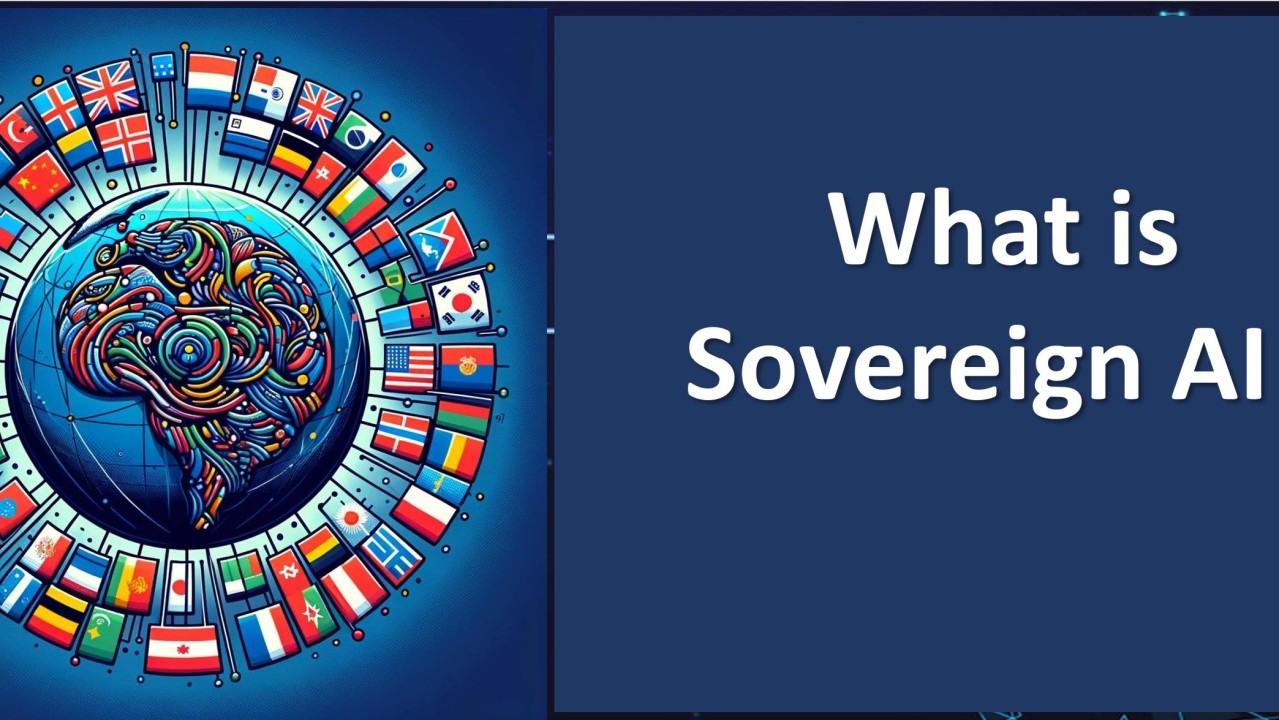
Before diving into the geopolitical ramifications, we must define what Sovereign AI truly means. At its core, Sovereign AI refers to a nation’s capability to develop, train, deploy, and regulate artificial intelligence models using its own domestic infrastructure, data, workforce, and computational resources.
For decades, the digital world operated under a globalized model. Silicon Valley created the software, and the rest of the world consumed it. However, AI is fundamentally different from traditional software. AI models absorb cultural nuances, political ideologies, and social values from the data they are trained on. When a country relies entirely on foreign AI models, it inadvertently imports the foreign biases, values, and political perspectives embedded within those systems.
Therefore, Sovereign AI has quickly transitioned from a technological luxury to an absolute necessity for national survival. It represents a country’s digital border, protecting its cultural identity, economic stability, and national security from foreign algorithmic influence.
Why Nations Are Rushing to Build Their Own AI
The race for AI autonomy is accelerating at a breakneck pace. Governments around the world are allocating billions of dollars to build localized AI ecosystems. The drivers behind this aggressive push can be categorized into three main pillars:
1. Data Sovereignty and Privacy
Data is the new oil, and AI is the refinery. When domestic data is sent abroad to train foreign AI models, a nation loses control over its most valuable digital asset. Sovereign AI ensures that sensitive citizen data, governmental records, and proprietary corporate information remain within national borders, protected by local privacy laws.
2. Cultural and Ideological Preservation
AI models like ChatGPT or Claude inherently reflect Western, liberal democratic values because they are primarily trained on English-language data sourced from Western platforms. For countries in the Middle East, Asia, or Africa, these models often fail to understand local traditions, legal frameworks, and cultural sensitivities. Developing a sovereign model allows nations to train AI on their own literature, history, and social norms.
3. Economic and Technological Resilience
Relying on foreign tech monopolies exposes a country to severe geopolitical risks. If political alliances shift, a foreign power could easily cut off access to vital AI APIs, instantly crippling a nation’s digital economy. By building independent infrastructure, countries insulate themselves from external geopolitical pressures and trade sanctions.
The New AI Cold War: Washington vs. Beijing
The geopolitical arena of AI is currently dominated by a bipolar rivalry between the United States and China. This tech-driven cold war is setting the stage for how the rest of the world approaches Sovereign AI.
The United States: Private Sector Dominance
The American approach to AI is heavily driven by private tech giants like Microsoft, Google, Meta, and OpenAI. The U.S. government plays a supportive role, focusing on funding foundational research, securing supply chains, and imposing export controls. Washington’s primary strategy is to maintain a technological lead by restricting adversaries’ access to cutting-edge hardware, such as advanced semiconductor chips manufactured by NVIDIA.

China: State-Driven Integration
In contrast, China treats AI as a centralized national priority. The Chinese government tightly regulates its tech sector while providing massive state subsidies to companies like Baidu, Tencent, and Alibaba. Beijing’s focus is on creating a strictly controlled AI ecosystem that aligns perfectly with state ideology. Through its “Digital Silk Road” initiative, China is also exporting its AI surveillance and governance models to developing nations, challenging Western technological hegemony.
The Critical Components of Sovereign AI Infrastructure
Building a truly sovereign AI ecosystem is an monumental task that requires a massive alignment of resources. A nation cannot simply claim to have Sovereign AI by writing a policy; it must possess the physical and intellectual infrastructure to back it up.
There are four fundamental pillars that a country must secure to achieve AI independence:
[Compute Infrastructure] ➔ [Localized Data] ➔ [Domestic Talent] ➔ [Regulatory Framework]
To break down these essential requirements systematically, countries must evaluate their capabilities across the following domains:
A. Advanced Hardware and Compute Power
The backbone of any AI system is computational power. This requires massive data centers packed with high-end Graphics Processing Units (GPUs) or specialized AI chips. Because chip manufacturing is concentrated in a few geographic locations like Taiwan, securing a stable semiconductor supply chain is the most difficult hurdle for most nations.
B. Sovereign Data Repositories
A sovereign model needs high-quality, localized training data. This includes digitized national archives, local news repositories, native language literature, and domestic legal texts. Without clean, representative local data, the resulting AI will still suffer from foreign hallucinations.
C. Domestic Talent and Research Ecosystems
A severe brain drain threatens many developing nations as top AI scientists flee to Silicon Valley or Beijing for higher salaries. Achieving AI sovereignty requires investing heavily in local universities, research labs, and tax incentives to keep elite data scientists and machine learning engineers within the country.
D. National Energy Grid Capacity
AI training models consume astronomical amounts of electricity. A country looking to build its own AI infrastructure must possess a highly resilient, scalable, and ideally green energy grid capable of powering massive, non-stop data center operations.
Geopolitical Ramifications: Baling, Non-Alignment, and Tech Blocs
As Sovereign AI becomes the norm, the traditional geopolitical chessboard is being completely rewritten. We are moving away from a globalized internet toward a fragmented “splinternet,” where tech alliances dictate global diplomacy.
The Rise of Tech Non-Alignment
Just as nations remained neutral during the 20th-century Cold War, many countries today are choosing a path of “Tech Non-Alignment.” Nations like India, Brazil, and Indonesia are refusing to blindly adopt either American or Chinese AI ecosystems. Instead, they are leveraging their massive populations and unique data pools to build their own sovereign models, ensuring they remain independent actors on the global stage.
The Middle Eastern AI Renaissance
The United Arab Emirates (UAE) and Saudi Arabia are prime examples of how oil wealth is being weaponized to buy AI sovereignty. The UAE’s Technology Innovation Institute developed Falcon, a world-class, open-source large language model that rivals Western systems. By investing billions in compute infrastructure, the Middle East is positioning itself as a neutral global hub for AI development, free from both US corporate control and Chinese state surveillance.
The Vulnerability of Small and Developing Nations
While wealthy nations can afford to build data centers and buy thousands of NVIDIA chips, smaller or economically disadvantaged nations face a dangerous dilemma. Unable to afford the immense costs of Sovereign AI, they risk falling into a state of “digital colonization,” where their entire cognitive and economic infrastructure is outsourced to a foreign superpower.
The Strategic Importance of the AI Supply Chain
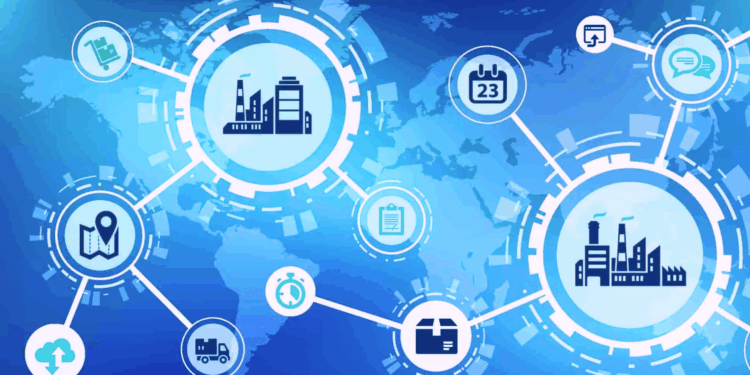
You cannot talk about the geopolitics of AI without addressing the physical supply chain that makes it possible. The entire global AI revolution relies on a shockingly fragile and highly concentrated supply chain.
The manufacturing of the world’s most advanced AI chips relies heavily on a complex, interdependent network of global players. This intricate ecosystem can be outlined as follows:
A. ASML (The Netherlands): The sole manufacturer of Extreme Ultraviolet (EUV) lithography machines, which are absolutely mandatory for printing the microscopic circuits on advanced chips.
B. TSMC (Taiwan): The world’s primary foundry capable of mass-producing the most sophisticated 3-nanometer and 2-nanometer chips designed by companies like NVIDIA and AMD.
C. NVIDIA and AMD (United States): The architectural masterminds who design the cutting-edge GPU microarchitectures optimized for deep learning and AI training workloads.
This extreme concentration of critical technology creates a massive geopolitical bottleneck. A conflict in the Taiwan Strait, for instance, could instantly halt global AI development, plunging the world into a technological dark age. Consequently, Western nations are aggressively moving to onshore chip manufacturing through initiatives like the U.S. CHIPS Act and the European Chips Act.
Regulating the Machine: Sovereign AI and Global Governance
As AI models become deeply integrated into national critical infrastructure, governance and regulation have become matters of national defense. However, global consensus on AI safety is notoriously difficult to achieve because different tech blocs have conflicting priorities.
| Region | Primary Regulatory Focus | Key Legislation / Approach |
| European Union | Consumer Protection & Human Rights | EU AI Act (Risk-based classification) |
| United States | Innovation & Market-Driven Growth | Executive Orders & Voluntary Commitments |
| China | State Security & Ideological Control | CAC Algorithmic Regulations & Censorship |
The divergence in these regulatory philosophies means that AI will never be a unified global utility. Instead, Sovereign AI will act as a digital reflection of a nation’s legal and ethical boundaries. A sovereign model built in Europe will prioritize data privacy above all else; a model built in China will prioritize social stability and state alignment; and a model built in the U.S. will prioritize raw performance and commercial scalability.

The Future: Algorithmic Warfare and Soft Power
Looking toward the horizon, Sovereign AI will dictate both the soft power and hard power dynamics of international relations.
Algorithmic Soft Power
In the past, superpowers projected influence through cinema, music, and consumer brands. In the AI era, soft power will be projected through conversational agents. If a generation of students worldwide grows up asking an American or Chinese AI chatbot for historical facts, political summaries, and philosophical guidance, that superpower effectively controls the narrative of global history. Sovereign AI allows nations to defend their own historical truths and cultural narratives.
Autonomous Cognitive Warfare
On the battlefield, Sovereign AI will power next-generation defense systems, ranging from autonomous drone swarms to AI-driven cybersecurity protocols. Relying on foreign software for military defense is an unacceptable vulnerability; a foreign adversary could easily code a “backdoor” to disable defensive systems during a conflict. Therefore, military sovereignty in the 21st century is fundamentally tied to AI sovereignty.
Conclusion: Navigating the Fragmented Future
The dawn of Sovereign AI marks the definitive end of the borderless internet utopia. As artificial intelligence transforms into the ultimate instrument of national power, nations must act decisively to secure their digital sovereignty.
The countries that succeed in building robust, self-reliant Sovereign AI ecosystems will secure their place as leaders of the new world order. Meanwhile, those who fail to adapt run the risk of becoming technologically dependent, losing control over their data, their culture, and ultimately, their geopolitical destiny. The algorithmic race has begun, and the stakes could not be higher.