
The global marketplace is undergoing a profound structural shift. For decades, commerce relied heavily on manual legacy systems analog documentation, physical clipboards, phone call verifications, and labor-intensive warehouse picking. Today, those systems are collapsing under the pressure of soaring e-commerce volumes, unpredictable global disruptions, and shifting workforce demographics. Traditional manual supply chains are no longer just inefficient; they are a severe financial liability.
Modern enterprise survival dictates a hard turn toward complete operational digital transformation. The replacement of legacy processes with end-to-end intelligent automation is not an option for future growth it is the modern baseline for staying in business. This comprehensive analysis breaks down exactly why autonomous operations are rendering manual logistics obsolete.
1. The Core Limitations of Manual Ecosystems
To understand why automated systems are winning, we must first look at the inherent vulnerabilities built into traditional, human-dependent supply chains. Manual logistics rely heavily on human data entry, physical labor, and localized communication channels. While human intelligence is highly adaptable, human mechanics are constrained by physical fatigue, cognitive overload, and variable error rates.
A major bottleneck in legacy systems is the fragmentation of data. When an inventory manager logs stock changes on a spreadsheet, that data is already historical by the time it is saved. It is not live. If a major shipment is delayed at a shipping port, a manual system relies on a chain of emails or phone calls to alert the procurement team. This delayed visibility triggers a domino effect of operational errors: unexpected out-of-stock scenarios, missed production schedules, and frustrated clients.
Furthermore, manual labor scales poorly. When a business experiences a seasonal surge in demand, a manual warehouse must rapidly hire, onboard, and train temporary staff. This onboarding curve creates an immediate spike in overhead costs, and the influx of untrained workers routinely leads to a higher frequency of fulfillment errors, workplace safety incidents, and damaged merchandise.
2. Defining the Modern Automated Supply Chain
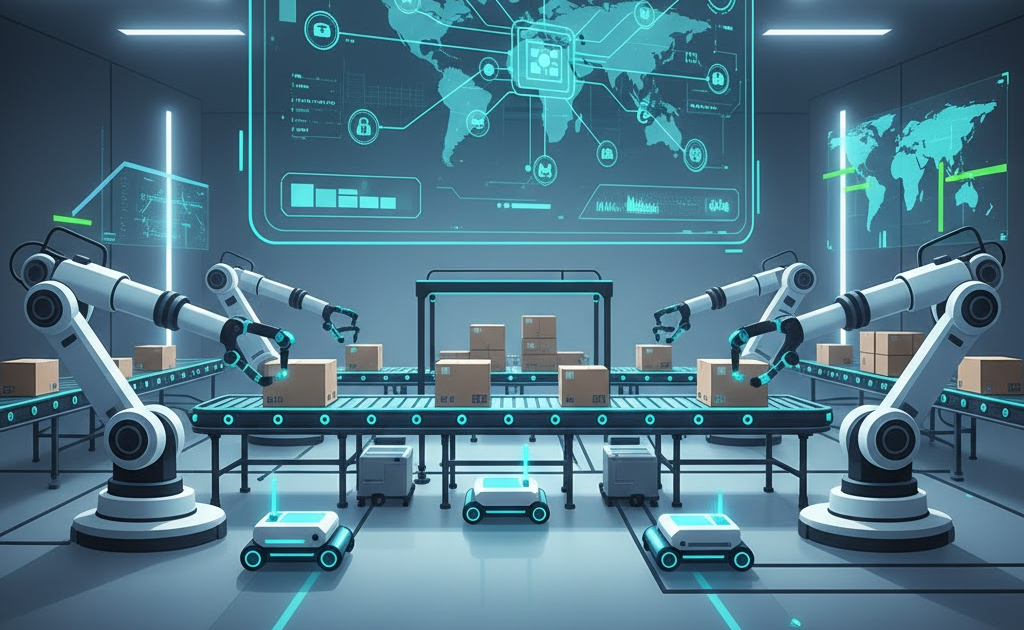
True supply chain automation goes far beyond simple software scripts or a standalone conveyor belt. It represents a fully integrated ecosystem where software and hardware communicate dynamically without requiring human intervention for routine tasks. This modern paradigm relies on several interconnected layers of cutting-edge technology:
A. Artificial Intelligence (AI) and Machine Learning (ML): These function as the analytical brain of the operation, parsing massive historical datasets to forecast demand shifts, optimize shipping routes, and dynamically adjust warehouse slotting patterns.
B. The Internet of Things (IoT): A vast network of smart sensors, RFID tags, and GPS trackers attached to individual pallets and products, transmitting continuous updates regarding location, ambient temperature, and cargo handling conditions.
C. Robotic Process Automation (RPA): Software bots engineered to handle repetitive digital tasks, such as cross-referencing supplier invoices, updating customs documentation, and generating purchase orders automatically.
D. Autonomous Hardware: Physical machinery, including Autonomous Guided Vehicles (AGVs), Automated Storage and Retrieval Systems (ASRS), and smart robotic picking arms that handle heavy inventory sorting round-the-clock.
When these systems function in harmony, they transform the supply chain from a reactive operation into an elastic, self-healing network capable of adapting instantly to external market pressures.
3. Financial Benefits of Eliminating Manual Workflows
From an administrative perspective, the financial argument for deploying automated supply networks is ironclad. While the initial capital expenditure for robotic hardware and enterprise software can be substantial, the long-term return on investment (ROI) consistently justifies the transition by driving down variable operational costs.
Radical Reduction in Labor Overhead
Manual fulfillment structures require continuous expenditure on wages, overtime, healthcare benefits, and recruitment campaigns. Conversely, automated machinery operates continuously through nights, weekends, and holidays without incremental labor costs. By offloading routine packing, sorting, and data entry tasks to automated platforms, companies can shift their existing human capital toward high-value strategic roles, such as supplier relationship management, complex problem-solving, and product development.
Mitigation of Expensive Fulfillment Errors
Human error in order picking and data entry is a massive drain on profitability. The true cost of an incorrect shipment includes the original fulfillment labor, return shipping fees, reverse logistics processing, and potential customer churn. Automated picking systems achieve accuracy rates exceeding 99.9%, drastically lowering return rates and protecting brand reputation.
Optimized Inventory Carrying Costs
Manual tracking systems often force businesses to maintain high levels of safety stock to shield themselves against unexpected data blind spots. This practice ties up critical working capital in physical inventory and drives up warehouse leasing costs. Automated networks provide total, real-time inventory visibility, allowing companies to implement lean, Just-In-Time (JIT) fulfillment models that lower carrying costs while maintaining high service levels.
4. Key Technological Components of Autonomous Logistics
The transition away from manual workflows relies on specific, scalable technologies. Implementing these components turns traditional warehouses into agile distribution centers.
+-----------------------------------------------------------------+
|               INTELLIGENT SUPPLY CHAIN CORE ENGINE             |
+-----------------------------------------------------------------+
                                 |
        +------------------------+------------------------+
        |                                                 |
        v                                                 v
+-------------------------------+                 +-------------------------------+
|     WAREHOUSE AUTOMATION      |                 |    PREDICTIVE DATA ENGINE     |
|  - ASRS Inventory Vaults      |                 |  - Machine Learning Demand   |
|  - Autonomous Fleet (AGVs)    |                 |  - Real-Time IoT Telemetry   |
|  - Robotic Co-Bot Picking     |                 |  - Automated Customs/Invoices|
+-------------------------------+                 +-------------------------------+
Advanced Automated Storage and Retrieval Systems (ASRS)
Traditional warehouses utilize valuable vertical space poorly because standard forklifts face physical height limits, and manual picking takes longer at higher elevations. ASRS technology solves this by utilizing ultra-dense vertical racking configurations where high-speed automated cranes navigate narrow aisles to extract pallets with perfect precision. This approach effectively quadruples the storage capacity of an existing facility footprint.
Intralogistics Robotics and AGVs
The modern warehouse floor is populated by autonomous mobile robots (AMRs) and AGVs that safely navigate shared spaces alongside human operators. These machines rely on advanced LiDAR technology, onboard cameras, and smart mapping software to transport heavy materials across fulfillment centers. This keeps human workers from walking miles across warehouse floors every day, reducing workplace fatigue and cutting down on accidental injuries.
Predictive Analytics and Intelligent Forecasting
Manual demand planning often looks backward, analyzing historical sales sheets to guess what inventory will be needed next quarter. Automated forecasting platforms utilize predictive AI to evaluate hundreds of distinct variables concurrently, including macro-economic indicators, regional weather patterns, social media trends, and real-time point-of-sale data. This capability allows logistics managers to position product inventory across fulfillment hubs before customers even click the purchase button.

5. Overcoming Hurdles in the Automation Journey
Transitioning from a legacy manual architecture to a fully automated framework requires careful planning. Organizations must navigate several distinct integration challenges to achieve a successful rollout.
A. Data Silo Fragmentation: Legacy companies often run on disparate, outdated software applications that do not naturally communicate with modern AI systems. Bridging this gap requires the deployment of robust cloud-based Application Programming Interfaces (APIs) to establish unified data pipelines across the entire enterprise.
B. Workforce Cultural Resistance: Human employees frequently view the arrival of automation platforms with skepticism or fear regarding job security. Executive leadership must actively combat this friction by transparently communicating upskilling opportunities, proving how automated tools eliminate exhausting manual labor and open paths to technical career advancement.
C. Cybersecurity Vulnerabilities: As supply chains transition to internet-connected IoT sensors and cloud infrastructure, they become potential targets for digital threat actors. Implementing strict Zero-Trust network security models, end-to-end data encryption, and continuous monitoring protocols is essential to safeguard critical operational data.
6. The Long-Term Strategic Value of Automation
Ultimately, the choice to replace manual processes with automation is about structural survival and market agility. An automated supply chain yields a level of business resilience that manual operations simply cannot replicate.
When global shipping disruptions occur, automated networks can instantly identify secondary supply routes and re-route incoming freight automatically. When consumer demand spikes overnight, automated fulfillment hubs can scale up processing speeds immediately without needing emergency staffing changes. This level of speed, visibility, and adaptability is exactly what separates industry leaders from struggling brands in today’s fast-moving market.
The verdict is clear: the era of the manual supply chain is coming to an end. Businesses that embrace digital transformation, invest in intelligent automation, and eliminate human-error bottlenecks will unlock unprecedented operational efficiency. Those that delay will find themselves overtaken by a faster, smarter, and entirely automated global marketplace.