The intersection of science, engineering, and digital innovation is orchestrating a profound paradigm shift in human healthcare. For decades, traditional medicine relied heavily on a reactive model—treating illnesses after symptoms manifested. Today, a massive wave of high-consequence innovation, universally classified as Deep Tech, is completely rearchitecting this landscape. Deep tech refers to the blending of profound scientific discoveries and advanced engineering to solve the world’s most complex challenges. When deployed within the medical sector, it shifts the focus from generalized, reactive treatments to hyper-personalized, proactive, and predictive care.
From artificial intelligence (AI) discovering life-saving drugs in record time to compact nuclear fusion reactors securing critical medical isotopes, these technologies are no longer speculative science fiction. In 2026, they represent core components of clinical workflows worldwide. This article provides an extensive, multi-dimensional analysis of how deep tech is redefining modern medicine, examining its core pillars, technological components, regulatory landscapes, and economic impacts.
1. Defining Deep Tech in the Healthcare Ecosystem
Understanding the profound transformation underway requires a clear distinction between standard digital health tools and genuine deep tech. While standard digital health involves consumer-facing software, mobile applications, and basic telehealth infrastructure, deep tech operates on a fundamentally different layer. It demands substantial research and development (R&D), significant capital investment, prolonged gestation periods, and highly specialized intellectual property.
+-------------------------------------------------------------+
|                     DEEP TECH HEALTHCARE                    |
|                                                             |
|  [Quantum Computing] -> Accelerates Molecular Modeling     |
|  [Generative AI]     -> Automates De Novo Drug Design       |
|  [Multi-State Fusion]-> Localizes Medical Isotope Synthesis |
|  [CRISPR-Cas9 Gene]  -> Rewrites Malicious Genetic Code    |
+-------------------------------------------------------------+
Deep tech in medicine relies on converging distinct scientific disciplines—such as quantum mechanics, cellular biology, computational fluid dynamics, and advanced robotics—to create novel interventions. Rather than merely optimizing administrative workflows or making medical records more accessible, deep tech seeks to fundamentally decode human physiology, predict pathologies before they occur, and construct targeted therapies at the atomic or molecular scale.
2. The Core Pillars of Modern Medical Deep Tech
The contemporary revolution in healthcare is anchored by several foundational technological pillars. Each pillar addresses a long-standing limitation in medical practice, from human cognitive constraints in diagnostics to the immense financial and time burdens of pharmaceutical development.
A. Artificial Intelligence and De Novo Drug Discovery
The traditional pharmaceutical pipeline is notoriously inefficient, frequently requiring over a decade and billions of dollars to bring a single therapeutic compound to market. Deep tech completely upends this trial-and-error methodology through AI-driven generative chemistry and machine learning algorithms that predict molecular behavior.
Rather than screening thousands of pre-existing physical compounds, generative AI platforms design entirely new molecules (de novo) optimized to bind with specific disease targets. Machine learning models analyze massive structural biology datasets, predicting how proteins fold and interact with unprecedented accuracy. This computational leap compresses the pre-clinical discovery phase from several years to just a few months, drastically lowering costs and accelerating the timeline for bringing life-saving treatments to clinical trials.
B. Nuclear Fusion and Isotope Supply Security
Modern diagnostic imaging and targeted radiotherapies rely heavily on medical radioisotopes. Historically, global supply chains for these isotopes have been highly centralized and fragile, relying on aging nuclear fission reactors prone to unscheduled shutdowns.
Deep tech ventures are mitigating this vulnerability by leveraging compact, multi-state nuclear fusion technology. By developing downscaled, localized fusion reactors, innovators can synthesize critical medical isotopes directly within or adjacent to healthcare facilities. This decentralized manufacturing model drastically cuts transportation costs, minimizes the radioactive decay of time-sensitive materials, and ensures a highly resilient, consistent supply of diagnostic and therapeutic isotopes for cancer care.
C. Neural Digital Therapies and Bioelectronic Medicine
The human nervous system functions as an intricate biological communication network, constantly transmitting electrical signals to regulate organ function, immune responses, and metabolic states. Bioelectronic medicine—often realized through Neural Digital Therapies (NDTs)—seeks to interface directly with this neural architecture.
Instead of deploying traditional systemic pharmaceuticals, which often cause widespread side effects, deep tech introduces smart bioelectronic implants and non-invasive neural stimulators. These devices read, decode, and modulate specific neural pathways in real time. By delivering precise, targeted electrical micro-pulses, bioelectronic therapies treat chronic inflammatory conditions, autoimmune disorders, and treatment-resistant neurological diseases with second-by-second personalization.
D. Genomic Medicine and CRISPR Gene Editing
The capability to read human DNA rapidly and cost-effectively was the first major step in the genomic revolution. Deep tech has moved the industry into the next phase: the ability to actively write and edit the genetic code.
Clustered Regularly Interspaced Short Palindromic Repeats (CRISPR) and associated gene-editing platforms allow scientists to make hyper-precise alterations to genomic sequences. By utilizing specialized guide RNAs and molecular enzymes, engineers can excise deleterious mutations, insert therapeutic genes, or silence expressions that drive oncological growth. This structural intervention holds the potential to permanently cure inherited genetic disorders, such as sickle cell anemia and cystic fibrosis, rather than merely managing their lifelong symptoms.
3. High-Precision Diagnostics and Computational Medicine
The integration of deep tech into clinical diagnostics has elevated medical precision to unprecedented levels. By transitioning from qualitative assessments to quantitative, data-driven computational models, healthcare providers can isolate diseases at their absolute inception.
Traditional Workflow:
[Symptom Presentation] -> [Qualitative Testing] -> [Reactive Treatment]

Deep Tech Workflow:
[Multiomic/Wearable Data] -> [AI Risk Profiling] -> [Digital Twin Simulation] -> [Proactive Intervention]
A. Real-Time AI Diagnostic Assistants
In clinical settings, diagnostic errors and overlooked anomalies represent persistent challenges. Deep tech solutions, such as AI-assisted endoscopy and computer-aided oncology screenings, serve as an invaluable secondary pair of eyes for medical practitioners. Trained on millions of validated clinical images and video frames, these machine learning algorithms run concurrent analyses during active procedures. For example, during a colonoscopy, deep learning models can highlight subtle, flat polyps that might elude human vision, reducing missed detection rates by up to 50 percent and radically altering patient prognoses.
B. Medical-Grade Wearables and Proactive Care
The consumer wearable market has rapidly matured into a medical-grade diagnostic network. Advanced sensors embedded in everyday devices continuously capture high-fidelity physiological parameters, including multi-lead electrocardiograms (ECGs), photoplethysmography (PPG) data for blood oxygen and vascular dynamics, and continuous interstitial glucose concentrations.
These data streams are fed directly into predictive clinical algorithms. Rather than capturing a isolated snapshot of a patient’s health during an annual physical exam, clinicians receive longitudinal, real-time data. These systems can autonomously flag early indicators of atrial fibrillation, silent myocardial ischemia, or impending sepsis hours before physical symptoms materialize, enabling immediate, preventative interventions.
C. Digital Twins of Human Physiology
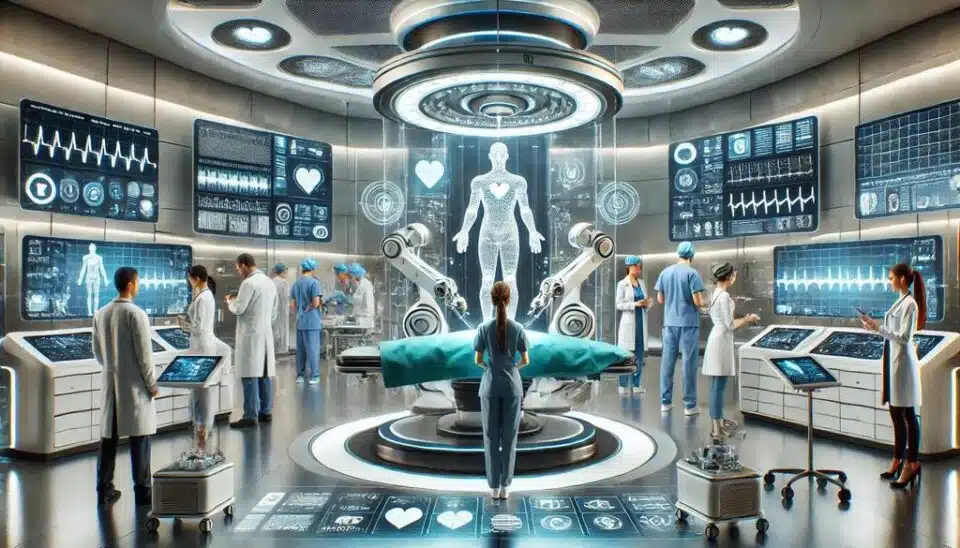
One of the most complex frontiers in computational medicine is the creation of digital twins—highly advanced, virtual replicas of individual organs or entire human physiological systems. Built by compiling a patient’s specific genomic profile, anatomical imaging, and real-time biometric inputs, a digital twin simulates how a patient’s body will react to specific stresses or interventions.
Before a cardiothoracic surgeon performs an intricate operation, they can execute the procedure virtually on the patient’s digital cardiac twin to identify potential hemodynamic complications. Similarly, oncologists can run thousands of simulated chemical interactions on a digital tumor model to determine the exact cocktail of chemotherapeutic agents that will yield the highest efficacy with the lowest systemic toxicity.
4. Advanced Therapeutics, Materials, and Applied Robotics
Beyond computational diagnostics, deep tech manifests physically through highly advanced materials, structural bioprinting, and autonomous surgical robotics that redefine therapeutic execution.
+-----------------------------------------------------------------+
|               THERAPEUTIC DEEP TECH INNOVATIONS                 |
+-----------------------------------------------------------------+
| A. Autonomous Surgical Robotics -> Sub-millimeter precision via |
|                                   computer-vision feedback.     |
+-----------------------------------------------------------------+
| B. 3D Bioprinting & Materials   -> Layer-by-layer cellular      |
|                                   scaffolds for tissue repair.  |
+-----------------------------------------------------------------+
| C. Renal Denervation (RDN)      -> Microcatheter radiofrequency |
|                                   ablation for hypertension.    |
+-----------------------------------------------------------------+
A. Autonomous and Assistive Surgical Robotics
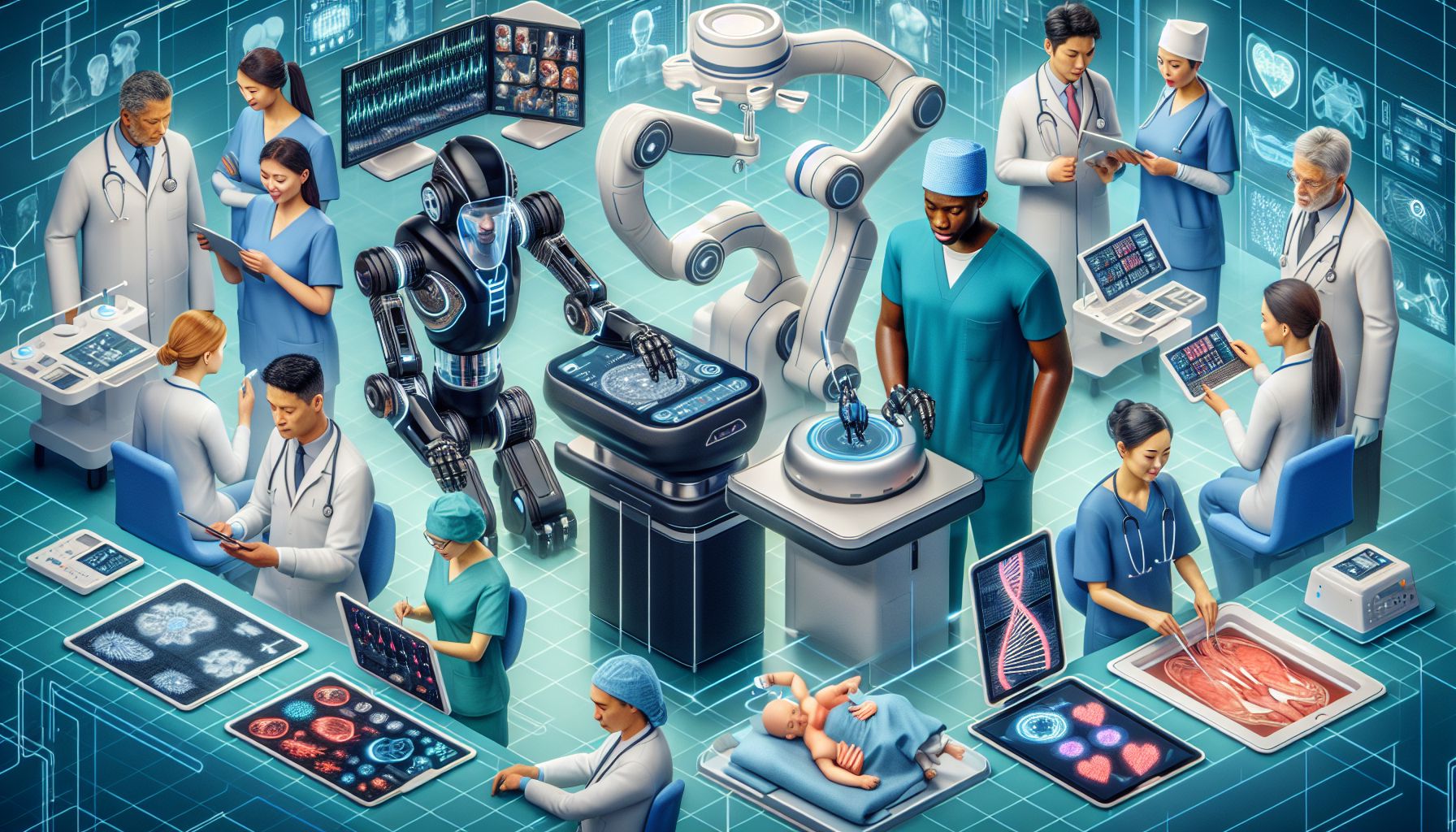
Robotics in the operating theater has evolved far beyond basic remote-controlled multi-jointed arms. Modern deep tech surgical platforms integrate advanced computer vision, machine learning, and haptic feedback loops to assist surgeons with sub-millimeter precision.
During minimally invasive procedures, these robotic systems map the internal surgical site in real time, accounting for the subtle structural movements caused by a patient’s breathing or heartbeat. By establishing digital boundaries, or “virtual fixtures,” the robot can prevent a surgeon’s instrument from inadvertently damaging critical vascular structures or nerve bundles. As these platforms gather data across thousands of successful operations, they increasingly automate routine procedural components, such as path-optimized suturing and precise tissue dissection.
B. 3D Bioprinting and Living Tissue Engineering
The chronic shortage of donor organs remains a critical bottleneck in global transplant medicine. Deep tech addresses this challenge via 3D bioprinting, an additive manufacturing technique that deposits living cell formulations (bio-inks) layer by layer to construct functional, vascularized tissues.
Using high-resolution patient imaging data as a structural blueprint, specialized bioprinters assemble complex cellular geometries. While printing fully functional complex organs like hearts or kidneys remains an ongoing R&D objective, the technology actively produces viable skin grafts for severe burn victims, structural cartilage for joint reconstructions, and miniaturized organ-on-a-chip models. These living tissue models allow pharmaceutical researchers to observe toxicity profiles on authentic human tissue before advancing to animal or clinical trials.
C. Structural Interventions: Renal Denervation
Deep tech is also pioneering device-based alternatives for conditions that previously required lifelong pharmaceutical adherence. A primary example is the evolution of Renal Denervation (RDN) for the treatment of chronic hypertension.
Utilizing specialized microcatheters introduced through the femoral artery, this procedure delivers precise radiofrequency or ultrasound energy to ablate overactive sympathetic nerves surrounding the renal arteries. By structurally dampening these overactive neural pathways, RDN delivers a continuous, permanent reduction in blood pressure. This offers a transformative solution for patients with treatment-resistant hypertension, eliminating the medication non-compliance risks and systemic side effects associated with complex pharmaceutical regimens.
5. Systemic Integration, Regulatory Hurdles, and Data Security
As these revolutionary technologies leave laboratory environments and enter commercial clinical settings, they encounter a complex web of regulatory frameworks, technical data challenges, and institutional inertia.
+------------------------------------------------------------+
|            DEEP TECH DEPLOYMENT CHALLENGES                 |
+------------------------------------------------------------+
|  REGULATORY BARRIERS   -> Outdated dynamic software paths  |
|  DATA BLOCKADES        -> Legacy EHR interoperability gaps |
|  CYBERSECURITY TRAPS   -> Distributed IoMT attack vectors  |
+------------------------------------------------------------+
A. Redefining Regulatory Evaluation Pathways
Traditional medical regulatory bodies, such as the United States Food and Drug Administration (FDA) and the European Medicines Agency (EMA), were constructed around static medical devices and stable chemical compounds. Deep tech, particularly adaptive machine learning algorithms that continually evolve based on new training data, challenges these classic validation models.
To safely integrate these innovations, regulatory frameworks are evolving to evaluate the software lifecycle rather than merely a static software version. Governments are introducing specialized regulatory sandboxes and dynamic pre-certification programs. These protocols assess an organization’s software development rigor, data verification pipelines, and algorithmic monitoring capabilities, allowing adaptive diagnostic tools to update seamlessly without requiring a completely new regulatory submission for every iterative improvement.
B. Overcoming Data Silos and EHR Interoperability
The full potential of medical deep tech can only be realized if advanced algorithms have uninhibited access to clean, high-fidelity, and standardized health data. Historically, medical data has remained locked inside fragmented, non-interoperable Electronic Health Records (EHR) managed by disparate healthcare networks.
To resolve this bottleneck, the modern healthcare IT landscape is rapidly standardizing around universal data protocols, such as the Fast Healthcare Interoperability Resources (FHIR) API framework. This common technical language allows deep tech platforms to securely connect to diverse hospital databases, aggregating genomics, imaging, and lab records seamlessly. This frictionless data flow ensures that clinical decision support systems can deliver context-specific, real-time insights precisely when a clinician is evaluating a patient.
C. Cybersecurity and Zero-Trust Architectures in IoMT
As the Internet of Medical Things (IoMT) expands to encompass millions of connected diagnostic sensors and therapeutic implants, the digital attack surface of global healthcare infrastructure grows exponentially. A malicious breach of an infusion pump or an implantable cardiac defibrillator presents immediate, life-threatening risks.
Consequently, deep tech implementation requires the simultaneous deployment of robust, zero-trust cybersecurity architectures. In a zero-trust ecosystem, no device or user is inherently trusted, regardless of whether they operate inside or outside the hospital’s network perimeter. Every single data transaction, API call, and firmware update must undergo continuous, multi-factor authentication and logging. Furthermore, end-to-end cryptographic encryption ensures that sensitive patient telemetry remains completely unreadable and tamper-proof during transmission and storage.

6. The Economic Imperative and Value-Based Healthcare
Beyond improving clinical patient outcomes, the global adoption of deep tech is fundamentally driven by macroeconomic necessity. As populations age and the burden of managing chronic diseases rises, traditional healthcare spending models are becoming financially unsustainable.
+------------------------------------------------------------+
|             VALUE-BASED ECONOMIC TRANSFORMATION            |
+------------------------------------------------------------+
|  [Old Fee-for-Service Model] -> Volume of Procedures Done  |
|               vs.                                          |
|  [New Deep Tech Model]       -> Long-term Patient Outcomes |
+------------------------------------------------------------+
Deep tech facilitates a structural shift away from traditional fee-for-service payment models—which financially incentivize the sheer volume of diagnostic tests and procedures performed—toward true value-based healthcare. In a value-based framework, hospital systems and medical device manufacturers are reimbursed based on long-term patient outcomes and the successful prevention of acute medical events.
By deploying predictive AI models, continuous remote monitoring, and targeted personal therapies, healthcare providers can drastically lower expensive emergency room admissions and minimize long-term hospitalization stays. The upfront capital expenditure required to secure deep tech infrastructure is ultimately offset by the profound, systemic cost reductions achieved by transitioning from expensive, late-stage disease management to highly effective, early-stage mitigation.
7. The Next Decade of Deep Tech Medicine
The coming decade will witness an unprecedented convergence of these independent deep tech pillars, completely reshaping the human experience of health and longevity. As quantum computing infrastructure scales, the time required to model molecular dynamics will collapse from days to fractions of a second, making instantaneous, bespoke drug manufacturing a standard clinical reality.
Simultaneously, the boundaries between biology and technology will continue to blur. Brain-computer interfaces (BCIs) will move beyond experimental mobility restoration for paralyzed individuals to address complex cognitive and psychiatric conditions, mapping and rewiring disrupted neural networks with profound accuracy. Organ engineering will mature, shifting from basic cellular patch repairs to the routine production of fully bioprinted, immunologically matched replacement organs that completely eliminate the risk of transplant rejection.
Modern medicine is shedding its historical reliance on generalized assumptions and delayed interventions. Guided by the relentless innovation of deep tech, the healthcare ecosystem is building a future where medicine is truly personalized, preventative, and precisely engineered to preserve human life.