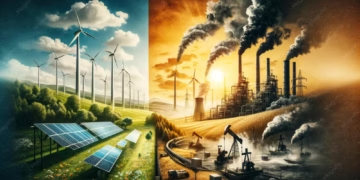
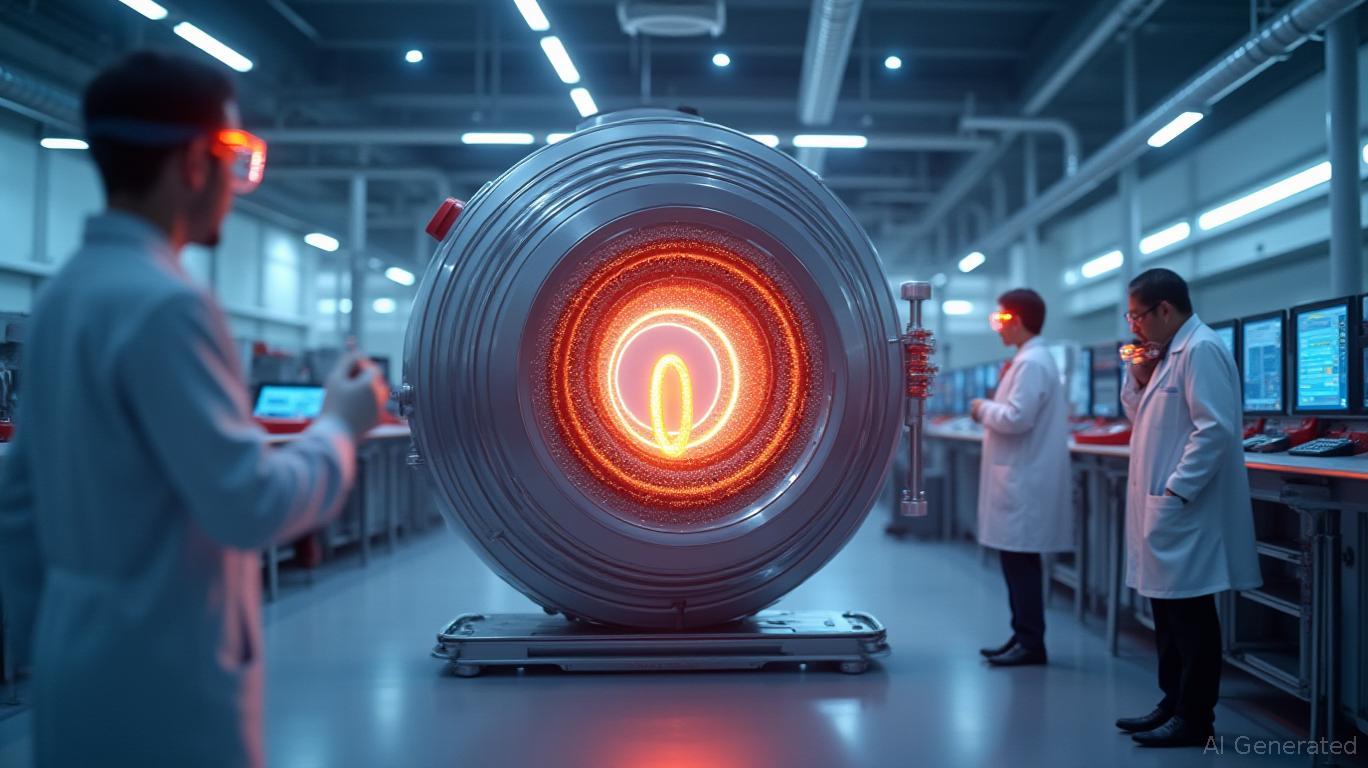
For more than half a century, nuclear fusion has been the ultimate holy grail of the global energy sector. It promises a world of completely limitless, carbon-free, and safe power, effectively replicating the exact physical process that fuels our Sun. Yet, for decades, practical commercialization has faced a persistent punchline: fusion is always exactly twenty years away. That narrative has officially been shattered.
A wave of dramatic technical milestones across both public research laboratories and private enterprises has officially pushed the industry out of theoretical physics and straight into advanced engineering reality. From the standardization of net energy gain using massive lasers to an unprecedented leap in manufacturing localized, high-temperature superconducting magnets, humanity has never been closer to grid-scale deployment.
Understanding the True Mechanics of Fusion
To appreciate the absolute scale of the latest breakthroughs, it is essential to understand how fusion operates and why it is fundamentally superior to traditional nuclear fission.
Fission relies on splitting heavy, unstable radioactive atoms like uranium, which leaves behind hazardous radioactive waste that persists for thousands of years. Fusion works in the exact opposite direction. It forces two light atomic nuclei together—typically isotopes of hydrogen known as deuterium and tritium—to form a single, heavier helium nucleus. This reaction releases massive amounts of energy without creating long-lived radioactive material or greenhouse gases.
The primary cosmic challenge on Earth is replicating the immense gravity and heat of the Sun. Because we lack solar gravity, we must heat hydrogen plasma to over 100 million degrees Celsius—more than six times hotter than the core of the Sun. At this extreme temperature, atoms become a roaring, turbulent plasma soup that must be tightly confined and stabilized.
Evaluating the Dominant Reactor Frameworks
The global race to commercialize this technology is being fought across distinct technological architectures. Each method approaches the problem of plasma confinement through entirely different engineering principles.
A. Magnetic Confinement Fusion (Tokamaks)
The tokamak remains the most widely engineered and mature reactor design in the world. It utilizes a donut-shaped vacuum chamber wrapped in powerful magnetic coils to trap and circulate the superheated plasma. Recent advancements in tokamak design include:
-
High-Temperature Superconducting Magnets: The integration of these advanced magnets allows reactors to generate significantly stronger magnetic fields while utilizing much smaller, more compact devices.
-
Extended Operational Endurance: Modern tokamaks are moving away from brief, unstable pulses toward long-duration continuous plasma maintenance, which is vital for steady grid integration.
-
Localized Supply Chains: Leading research nations have successfully fully localized the production of major reactor components, including massive toroidal field magnets, ensuring independent development.
B. Inertial Confinement Fusion (Laser Ignition)
Instead of trapping plasma for long periods using magnets, inertial confinement uses the world’s most powerful lasers to compress a tiny fuel pellet containing deuterium and tritium. This rapid compression triggers an instantaneous, highly concentrated explosion that releases net energy. Key developments include:
-
Standardized Ignition Protocols: Laboratories have successfully moved beyond the initial proof-of-concept phase, standardizing the laser delivery systems to achieve repeatable net energy returns.
-
Quadrupled Energy Yields: Recent tests have achieved record outputs, proving that laser-driven systems can generate multiple times the amount of energy delivered by the initial laser beam.
-
Private Commercialization Scaling: Private startups are rapidly raising hundreds of millions of dollars to scale up laser repetition rates from a few shots per day to multiple shots per second.
C. Magnetic Confinement Fusion (Stellarators)
While tokamaks resemble a symmetric donut, stellarators use an extraordinarily complex, twisted magnetic ring design. They are highly valued because they are inherently built for steady-state, continuous operation without the structural risks of plasma disruptions that plague traditional tokamaks. Recent updates involve:
-
AI-Optimized Magnetic Design: The geometric complexity of stellarators previously made them nearly impossible to manufacture, but advanced artificial intelligence has optimized the placement of the magnetic coils.
-
Record-Breaking Energy Turnover: Experimental stellarators have demonstrated exceptional plasma stability, maintaining high-performance heat levels for extended minutes of continuous run-time.
-
Surging Investor Confidence: Major venture capital rounds across Europe and North America are actively funding the transition of stellarators from small-scale laboratory experiments to full commercial grid models.
D. Magnetized Target Fusion
This hybrid approach combines elements of both magnetic and inertial systems. It takes a warm plasma target, confines it magnetically, and then uses heavy mechanical pistons or acoustic shockwaves to violently compress the plasma to fusion temperatures. Recent milestones show:
-
Millions of Degrees via Compression: New demonstration machines have proven that mechanical compression can successfully heat plasma to millions of degrees Celsius without requiring massive, multi-billion-dollar laser arrays.
-
Faster Path to Market: Because the mechanical infrastructure is significantly less complex than superconducting magnets or high-energy lasers, developers believe this path offers a highly cost-effective route to commercial power.
Global Scientific Milestones Driving the Industry Forward
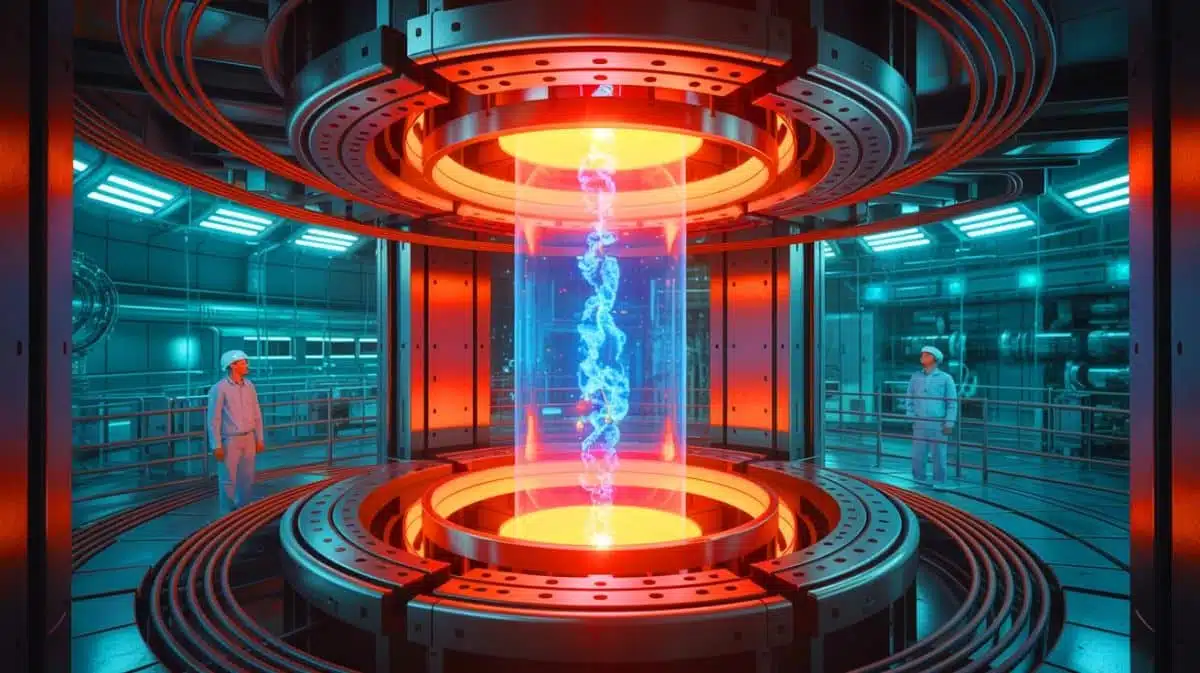
The transition into this new era of clean energy is defined by concrete, verifiable data points from top-tier facilities worldwide. The timeline below illustrates the rapid escalation of technical capabilities over the recent operational period.
The Economics of the Emerging Fusion Grid
With technical hurdles falling in rapid succession, the conversation has officially shifted from basic laboratory physics to corporate economics, grid integration, and supply chain scaling. According to data from the International Atomic Energy Agency (IAEA), total global investment into public and private fusion ventures has surged past $10 billion.
The structural capital flowing into the sector is no longer just speculative venture capital; it includes heavy industrial partnerships and long-term commercial agreements.
A. Grid Interconnection Applications
For the first time in history, private developers are moving to plug directly into public utilities. Companies have formally submitted applications to join major regional power grid operators, initiating the regulatory and engineering processes required to distribute fusion electricity to residential and commercial consumers.
B. Commercial Offtake Agreements
Tech conglomerates are moving aggressively to secure future clean energy sources to power massive, AI-driven data centers. Private developers have already signed binding commercial offtake frameworks, guaranteeing that the electricity generated by the first operational commercial reactors will be purchased immediately by enterprise buyers.
C. Regulatory Framework Localization
Governments are working diligently to separate fusion regulations from traditional nuclear fission laws. Because fusion reactors carry absolutely zero risk of catastrophic meltdowns, new specialized task forces are designing streamlined, rapid licensing pathways to accelerate plant construction.
D. Industrial Supply Chain Manufacturing
The industry is transitioning toward standardized, repeatable manufacturing models. Consortiums are actively engineering specialized automated machinery to wound massive high-temperature superconducting coils, moving away from slow, artisanal laboratory assembly to high-volume industrial production lines.
Overcoming Remaining Engineering Hurdles
Despite the immense optimism vibrating through the scientific community, several critical engineering barriers must be completely resolved before a fusion reactor powers a major city.
+------------------------------------------------------------+
|                THE COMMERCIALIZATION GAP                  |
+------------------------------------------------------------+
|                                                            |
|  [ Physics Breakthroughs ] --> Achieved Net Energy Gain    |
|                                                            |
|  [ Current Challenge ]     --> Continuous Power Production |
|                                                            |
|  [ Supply Chain Needed ]   --> Tritium Breeding Blankets   |
|                                                            |
+------------------------------------------------------------+
A. Material Degradation under Neutron Bombardment
The high-energy neutrons produced during a deuterium-tritium fusion reaction constantly bombard the inner walls of the vacuum chamber. Over time, this intense radiation causes standard industrial metals to become brittle and structurally unstable. Scientists are heavily testing advanced tungsten alloys and liquid metal blankets to shield the internal reactor architecture.
B. Tritium Supply Scarcity
While deuterium is easily extracted from ordinary seawater, tritium is an exceptionally rare isotope of hydrogen with a short half-life. The current global supply of tritium is limited. To combat this, future commercial reactors must integrate advanced lithium blankets that can dynamically “breed” their own tritium fuel during the active fusion reaction.
C. Thermal and Power Conversion Efficiency
Achieving a net energy gain inside the plasma core is a monumental scientific victory, but turning that raw heat into usable electricity introduces massive thermodynamic losses. Engineering teams are working to upgrade advanced helium-cooled heat exchangers and specialized steam turbines to maximize total system efficiency.
The Road Ahead for Global Clean Power
The implications of commercialized fusion energy cannot be overstated. As climate change continues to place immense pressure on aging global grids, and as the expanding AI economy demands unprecedented amounts of electricity, traditional renewables like solar and wind cannot handle the baseload demand alone.
Fusion represents a complete paradigm shift. It requires a minuscule physical footprint compared to sprawling solar farms, produces zero air pollution, and offers completely reliable, 24/7 baseload power regardless of weather conditions.
Industry projections indicate that the first fleet of commercial demonstration plants will begin construction before the end of the decade, with first grid injections targeted for the mid-2030s. Thanks to the monumental engineering breakthroughs realized over the past year, the question is no longer if humanity will harvest the power of the stars, but when.